6 mil greenhouse plastic is a common covering for high tunnels and growing houses. Yet thickness tells you only part of the story. To choose greenhouse film, compare UV protection, light performance, condensation control and the way you will install it.
Start with your crop, climate and growing season. Then ask suppliers for a film specification that matches those conditions. This guide explains what to compare before you order a new cover or replace an existing one.
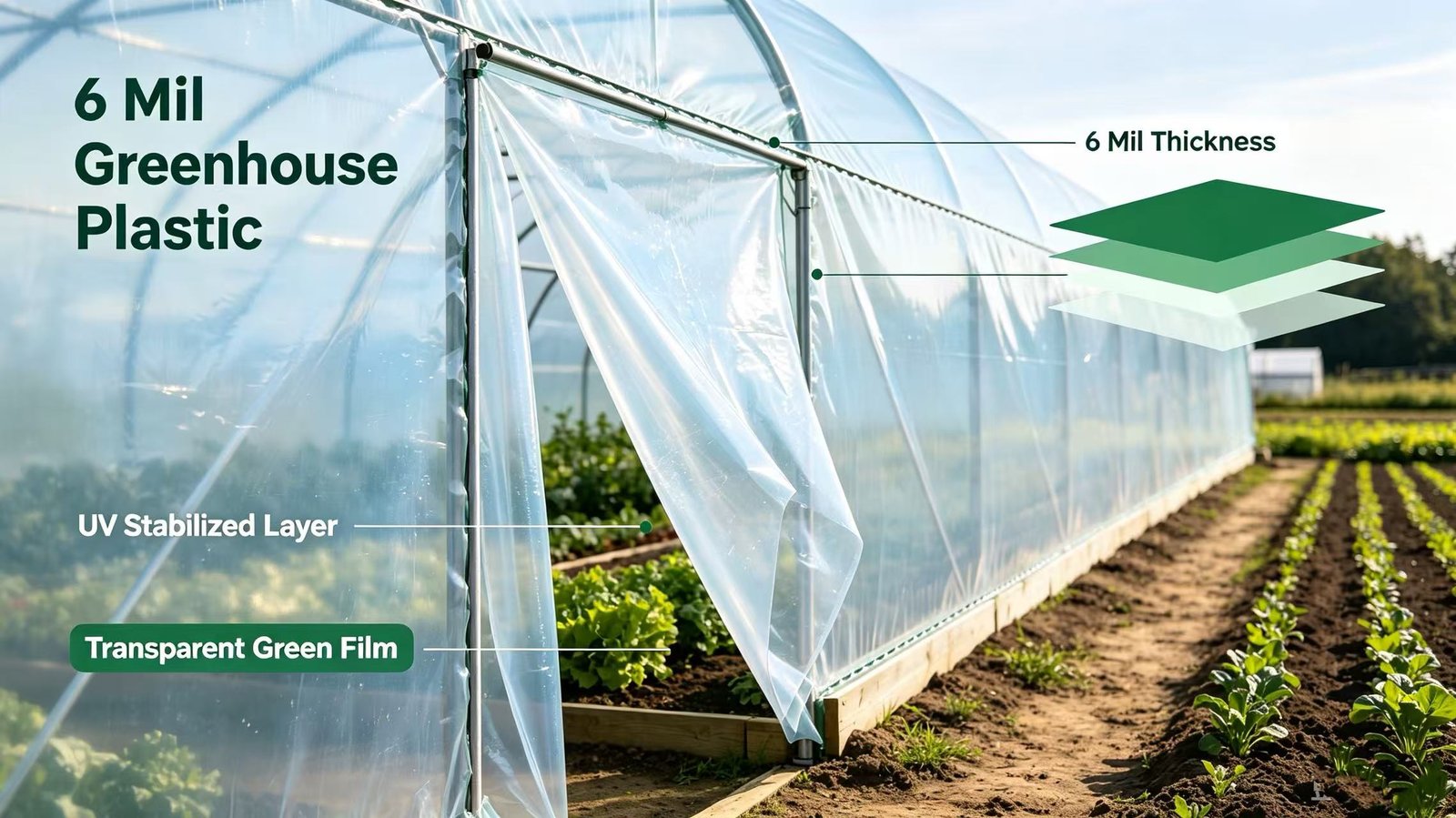
What Does 6 Mil Greenhouse Plastic Mean?
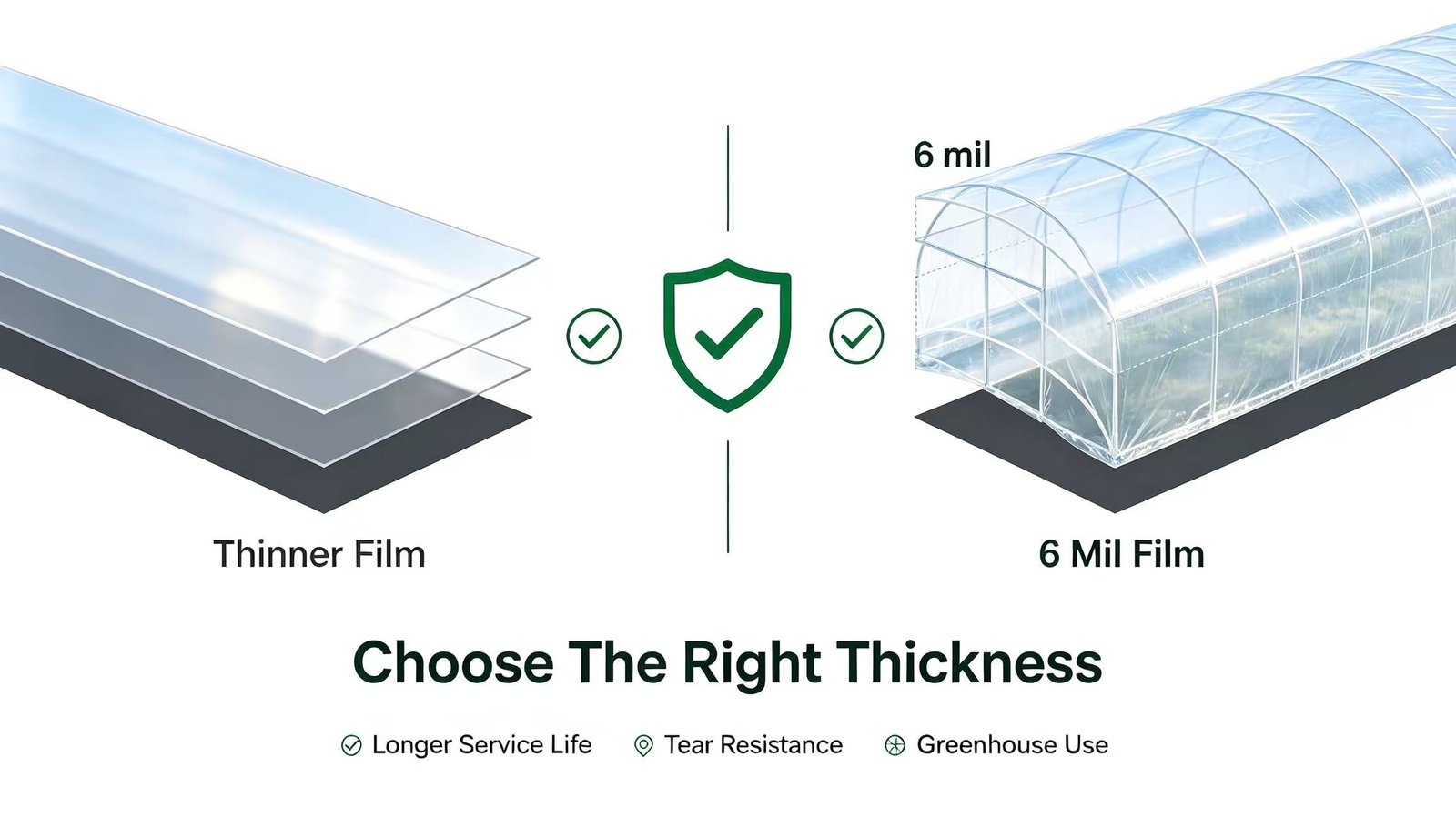
A mil is one thousandth of an inch. Therefore, 6 mil equals 0.006 inch, or 0.1524 mm. In metric terms, that is 152.4 microns.
| Nominal thickness | Millimeters | Microns |
|---|---|---|
| 4 mil | 0.1016 mm | 101.6 µm |
| 6 mil | 0.1524 mm | 152.4 µm |
| 8 mil | 0.2032 mm | 203.2 µm |
However, these are unit conversions, not stock sizes or performance ratings. A nominal 150-micron film and a 6 mil film are close in thickness, but they are not exactly the same. Therefore, ask for the stated thickness and manufacturing tolerance.
Oklahoma State University Extension identifies 6 mil polyethylene as a common high-tunnel covering. However, a thickness label does not confirm UV stability, tear strength or useful life. Compare the full specification rather than the number alone.
Why Compare More Than the Roll Price?
Greenhouse film forms part of a larger growing system. Its suitability depends on the crop, structure and climate, as well as the price of the roll.
A July 2026 review listed by Lawrence Berkeley National Laboratory examines energy and water efficiency across controlled-environment agriculture. It considers the building envelope alongside heating, lighting, water and operating practices. It does not establish a universal saving from one film.
For buyers, the useful lesson is to compare how a cover fits the whole greenhouse. A lower purchase price may offer little value if the specification does not suit the intended use.
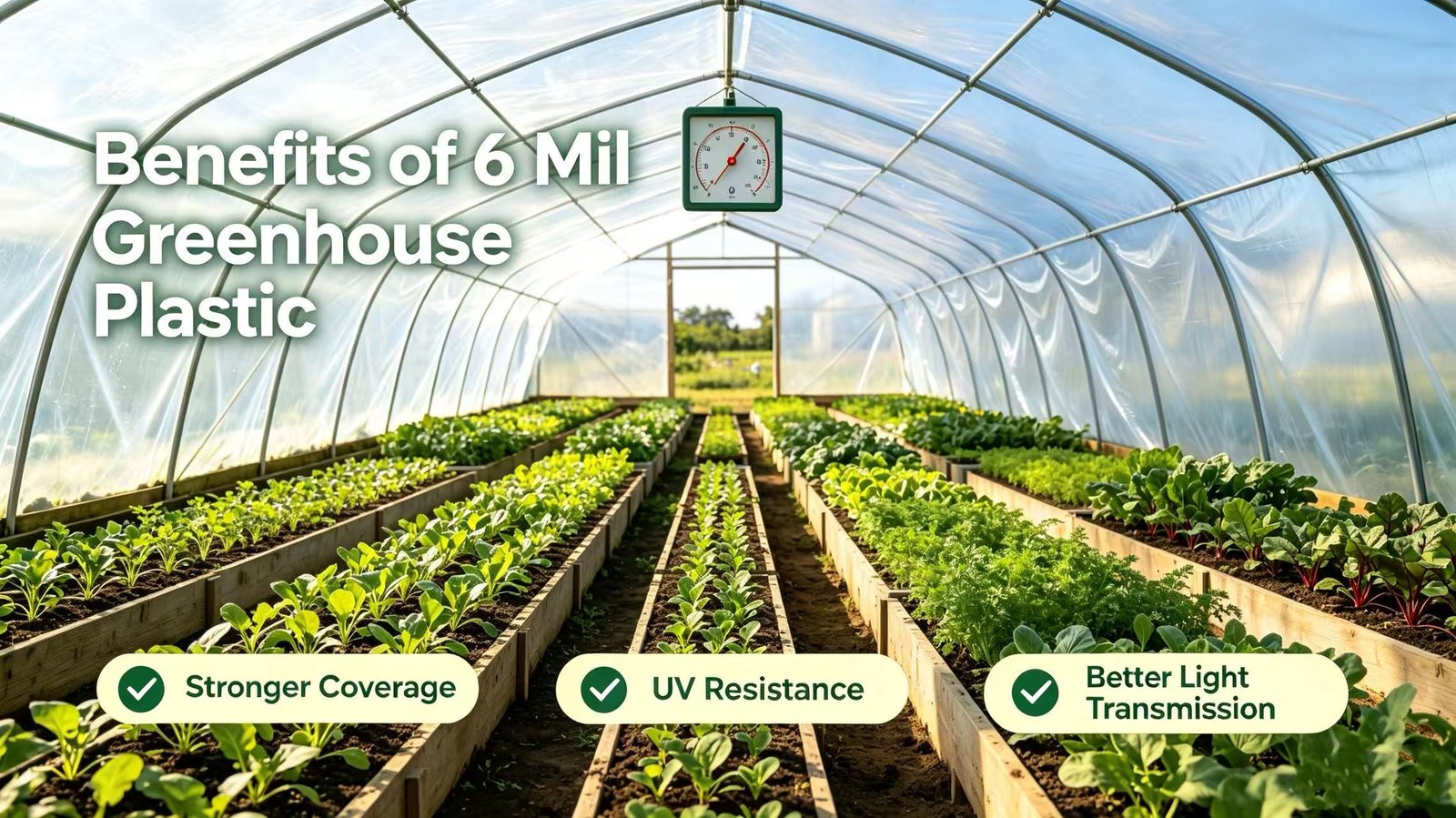
Which 6 Mil Greenhouse Plastic Features Do You Need?
First, write down your main growing constraint. Is winter light limited? Does water drip onto the crop? Do you heat the greenhouse overnight?
Use those answers to build a short specification.
| Your main concern | What to ask the supplier |
|---|---|
| Long periods of outdoor exposure | UV stabilization, rated use conditions and warranty exclusions |
| Limited winter light | Light-transmission data and the test method |
| Uneven light within the crop | Light-diffusion data alongside total transmission |
| Nighttime heating | Thermal or IR properties and suitable layer placement |
| Condensation dripping onto plants | Anti-drip treatment, installation direction and treatment life |
| An exposed or windy site | Mechanical test data and compatibility with the frame and fixing system |
UV Protection and Service Life
UV stabilization helps protect the film from sunlight-related degradation. It does not mean the film blocks every UV wavelength. In fact, the University of Connecticut’s film guidance notes that UV transmission can matter when growers use bees for pollination. Confirm both properties separately.
Also, request written service-life terms. Do not infer a warranty from thickness, layer count or a product photograph.
Light Transmission and Diffusion
Transmission describes how much light passes through a covering. In contrast, diffusion describes how that light spreads. They are different properties, so request both figures when they matter to the crop.
Ask whether the quoted transmission measures total solar light or photosynthetically active radiation, often called PAR. Also, check whether the result applies to one sheet or an installed system.
Virginia Tech’s glazing guide explains that frames, dirt, age and sun angle affect the light that reaches plants. Therefore, a clean-film laboratory figure is not a guarantee of light at crop level.
Thermal Properties
An IR or thermal feature can reduce the escape of long-wave radiant heat at night. That is different from a film intended to reduce daytime solar heat gain. Therefore, ask which function the product provides and how the supplier measures it. UConn’s film guidance distinguishes these two functions.
Anti-Drip Treatment
Anti-drip treatment helps condensed water spread into a film rather than form separate droplets. However, it does not remove moisture from the greenhouse. Ask which side faces inward, how the treatment works and how long it lasts. Keep humidity management in the operating plan. UConn explains the condensate-control mechanism.
6 Mil Greenhouse Plastic: One Layer or Two?
The choice depends on your growing season, heating needs and greenhouse design.
An inflated double-layer cover can improve insulation, but the second sheet also affects light transmission. Virginia Tech’s comparison of glazing materials shows this trade-off. Compare the complete system, including its blower and installation requirements.
For a heated greenhouse, ask the supplier to identify the inner and outer film grades. If the recommendation includes an IR layer, confirm its position in writing.
Also, inspect the rest of the structure. The UConn greenhouse energy checklist includes sealing leaks, repairing cover damage and checking doors and vents. A film upgrade should form part of that wider inspection.
Measure Before Ordering 6 Mil Greenhouse Plastic
Do not use the greenhouse’s floor width as the required film width. For a curved structure, measure the actual cover path over the frame, between the intended fixing points.
Then confirm the allowances for the supplier’s fixing system. Side curtains, end walls, overlaps and fastening details may need separate measurements. There is no single extra allowance that suits every structure.
Include these details in your inquiry:
- Greenhouse type and a drawing or clear photograph.
- Cover-path width and structure length.
- Roof, end-wall and side-curtain requirements.
- Nominal thickness and acceptable tolerance.
- Single-layer or double-layer installation.
- Crop, location and intended growing season.
- Required features, quantity and delivery destination.
Finally, ask the supplier to confirm whether the quoted width is an open-sheet width or another roll format. This avoids comparing two offers that describe different usable dimensions.
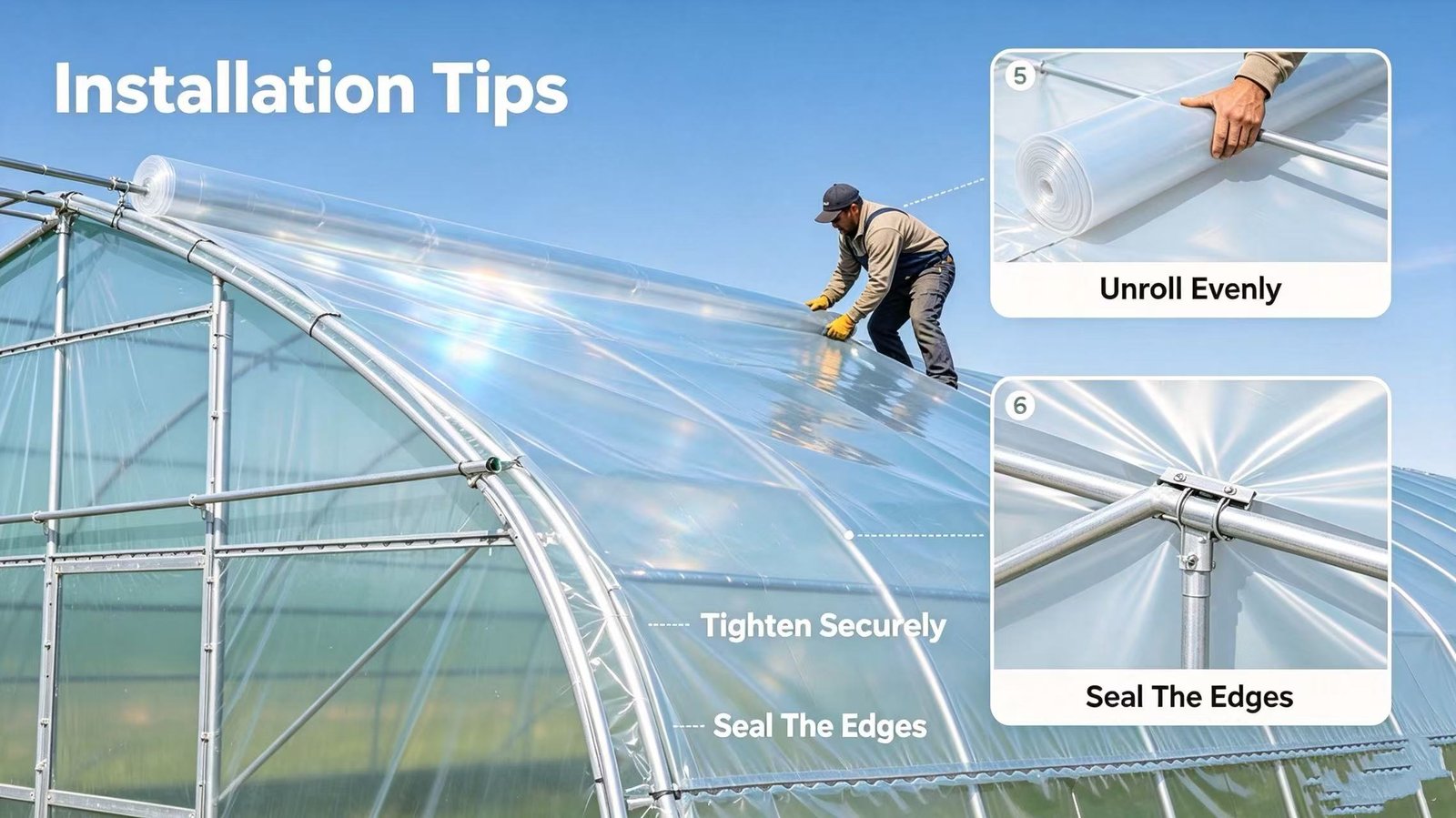
Installing 6 Mil Greenhouse Plastic With Fewer Risks
Before installation, inspect the frame and fixings. Smooth sharp edges and follow the film supplier’s instructions for contact surfaces, handling and tension.
In addition, check the following points with your installer:
- The correct inward-facing surface, where the film has a specified orientation.
- Compatibility between the film and the fixing channels or clips.
- Suitable installation weather and tensioning instructions.
- Approved cleaning and repair methods.
- Any limits involving pesticides, coatings or treated frame materials.
Finally, keep the product label, batch details and installation date. They provide a useful reference if you later need technical support.
How to Compare Quotes for 6 Mil Greenhouse Plastic
First, give each supplier the same specification for the quotation. Otherwise, a cheaper roll may differ in width, treatment, thickness tolerance or delivery terms.
| Quote item | Confirm before comparing prices |
|---|---|
| Film grade | Material description and intended application |
| Dimensions | Usable sheet width, roll length and thickness tolerance |
| Optical features | Transmission and diffusion figures with test conditions |
| Climate features | UV, thermal and anti-drip details where requested |
| Quantity | Roll count and total usable coverage |
| Commercial terms | Packaging, delivery basis and any stated minimum order |
| Service support | Written warranty terms and technical documents |
For a simple material comparison, divide the quoted film price by its usable area. However, compare freight and installation separately. If two covers have different documented replacement intervals, include that difference in your budget as well.
However, do not treat an estimated service life as a guaranteed replacement interval. Ask the supplier to distinguish expected use from contractual warranty coverage.
Frequently Asked Questions
Is 6 mil greenhouse plastic always the best choice?
No. It is a common starting point, but your structure, site exposure, crop and growing season determine the specification. Compare mechanical and optical data before choosing a grade.
Can I use ordinary construction plastic instead?
Do not assume it is equivalent because the thickness matches. Ask for a film specifically documented for greenhouse use, including its UV properties and intended exposure conditions.
Does thicker greenhouse film always last longer?
No. Thickness does not describe the whole product. Instead, compare the documented film grade, installation requirements and service-life terms as well.
Does anti-drip film stop condensation completely?
No. It changes how water behaves on the film surface. You still need an appropriate humidity-management plan for the crop and structure.
Discuss Your Greenhouse Film Specification With Xingke
The right cover starts with a clear description of your project. Explore Xingke’s greenhouse film range and prepare your dimensions, crop, location, preferred features and quantity.
Then contact the Xingke team to discuss a quotation. Confirm the available grade, roll dimensions, technical features and service-life terms in writing before placing an order.