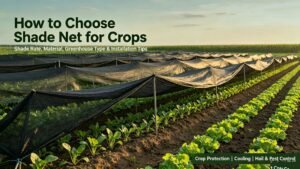
Grass-proof cloth, often sold as weed control fabric, covers the soil to reduce the light that reaches new weeds. It fits growing areas where the layout stays in place, such as container nursery blocks and some orchard rows. Start by clearing existing weeds, then use the cloth to reduce new growth and keep openings and edges accessible for follow-up work.
What Weed Control Fabric Can Do
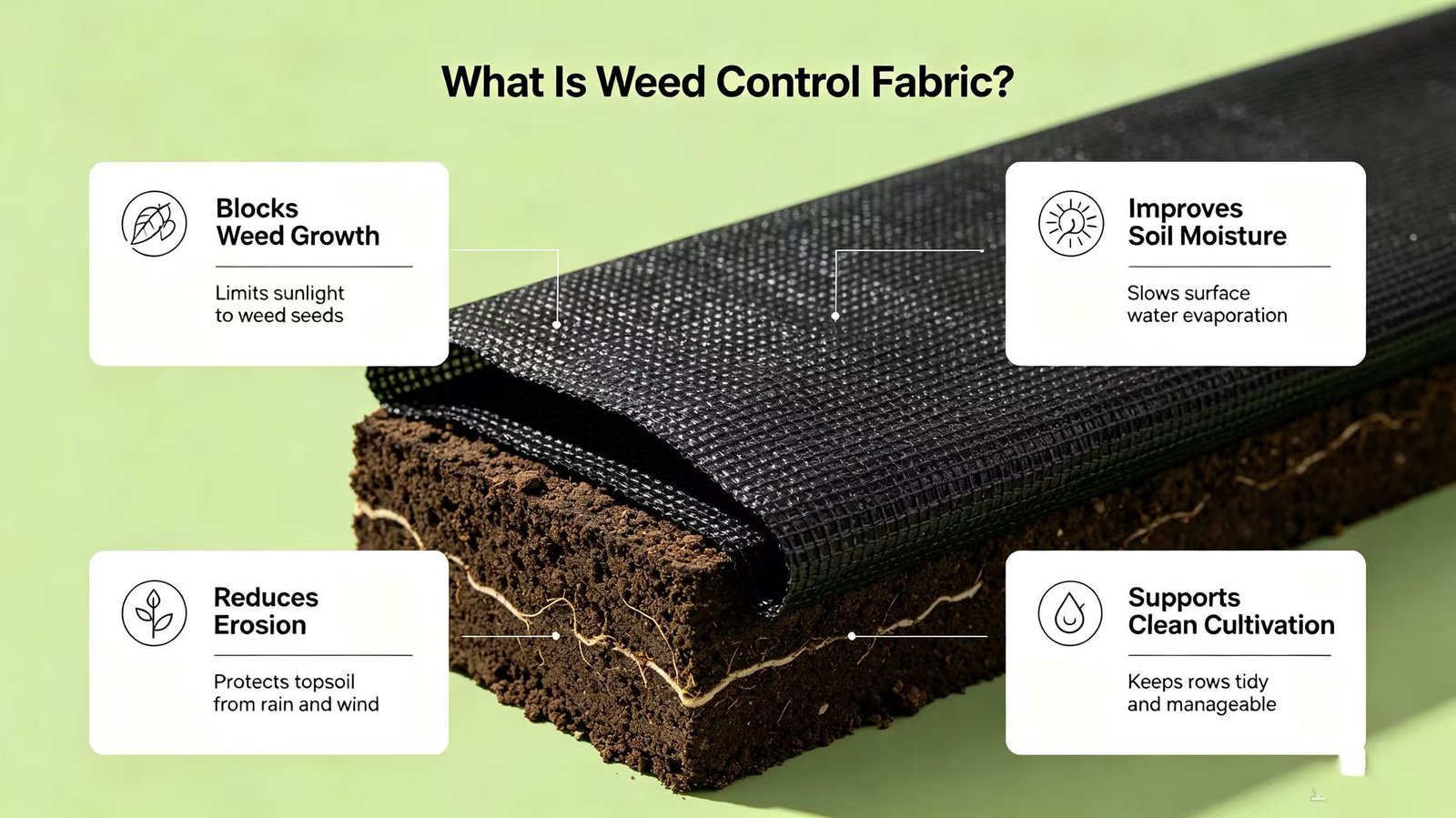
A dark, opaque ground cover limits light at the soil surface. This can suppress many young weeds beneath intact fabric. However, weeds can still emerge at planting holes, along seams or in soil that collects on top. Some established perennial weeds can also regrow from underground structures. For this reason, clear those weeds before you cover the soil, and check the edges during routine inspections. University of California Statewide IPM Program
The name grass-proof cloth covers more than one construction. For example, woven ground cover uses interlaced strips, while spunbond nonwoven fabric uses bonded fibres. Ask for the material, construction and water permeability of the grade you intend to buy. Xingke lists polypropylene spunbond nonwoven fabric for agricultural ground cover. Xingke product specifications
Compare Weeding Methods Before Covering the Soil
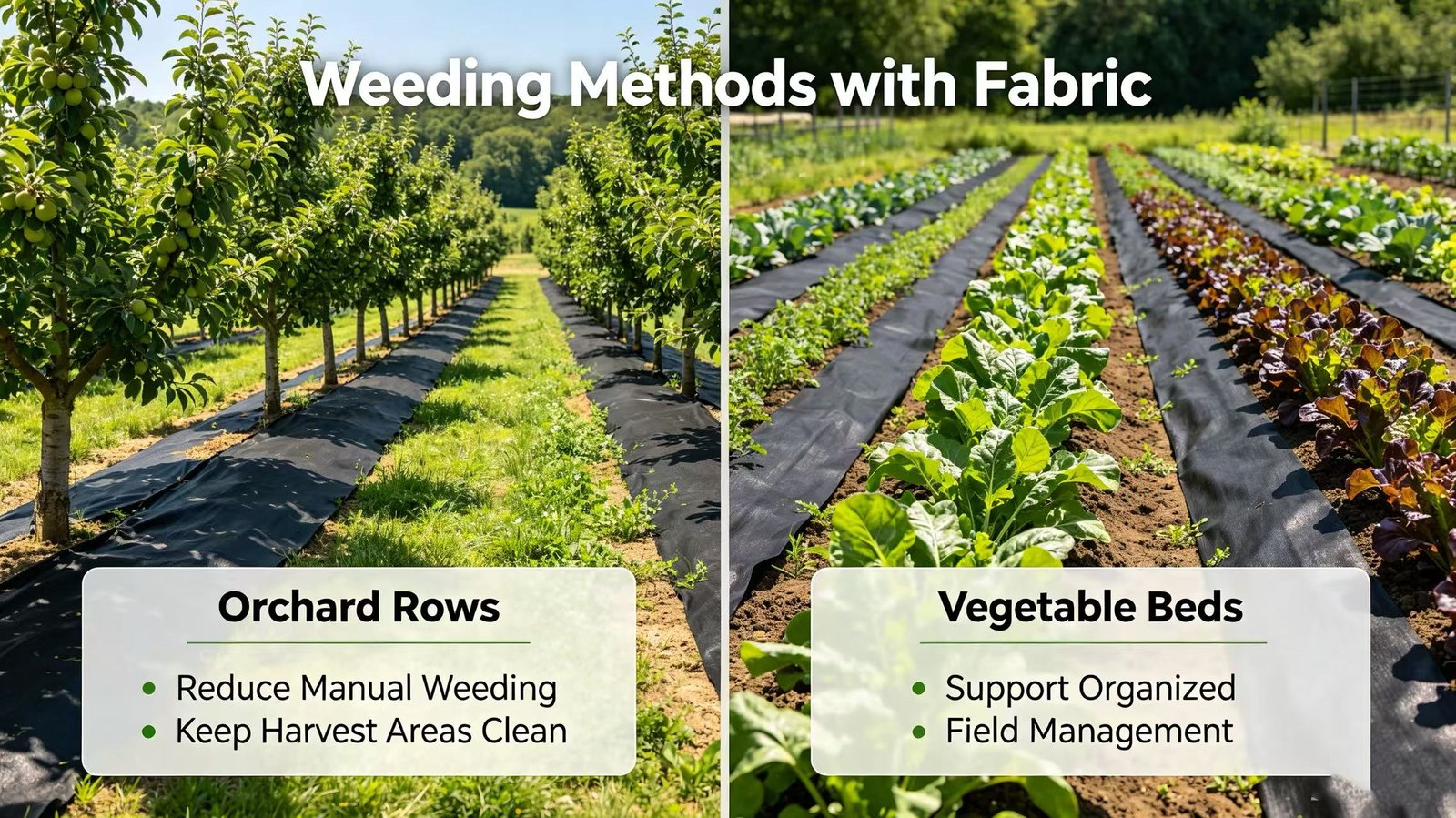
Choose the method that fits the weeds you have now and the work you can repeat later. In a young crop, hand weeding gives you access near stems. Meanwhile, a shallow hoe can clear small annual seedlings between rows. Digging or cultivation may spread fragments of some perennial weeds, so identify persistent patches before disturbing them. University of California Statewide IPM Program
| Method | Where it fits | What to plan for |
|---|---|---|
| Hand weeding | Scattered weeds near crops or fabric openings | Make regular passes before weeds set seed. |
| Shallow hoeing | Small annual weeds between open rows | Leave enough room to work around crop roots and drip lines. |
| Organic mulch | Beds that need flexible access or periodic replanting | Check the surface as the mulch settles and replenish it as needed. |
| Weed control fabric | Fixed nursery blocks and selected growing rows | Clear weeds first and plan access to seams, irrigation and damaged sections. |
Consider a nursery with two areas. The container block stays in place through the season, while the propagation bed changes layout several times. Ground cover may make sense under the containers, where workers can lift pots and inspect the surface. The propagation bed may be easier to manage with hand weeding and a removable organic mulch. Colorado State University Extension also distinguishes managed crop production from gardens and landscapes, where other mulches often suit the job better. Colorado State University Extension
Select Weed Control Fabric for Your Layout
Measure the surface you need to cover, including bends and interruptions. Then sketch the panel layout and mark drains, drip connections and routes for people or equipment. A wider roll can reduce seams, but it may also be harder to position between existing plants. Compare the usable width after allowing for overlaps and edge fixing.
When you request a sample, check how easy it is to cut, handle and secure. A figure in grams per square metre tells you the fabric weight per unit area. Also ask about light blocking, water permeability and suitability for exposed use. Confirm the attachment method for your soil and the expected use of the covered area.
Fabric and mulch film also serve different crop plans. A permeable ground cover can suit a fixed nursery surface where water needs to pass through the material. Plastic mulch is a film used on crop beds, often with irrigation beneath it. If you are comparing films for a vegetable crop, check the colour, dimensions and removal plan. Xingke mulch film guide
Install Weed Control Fabric and Check It in Use
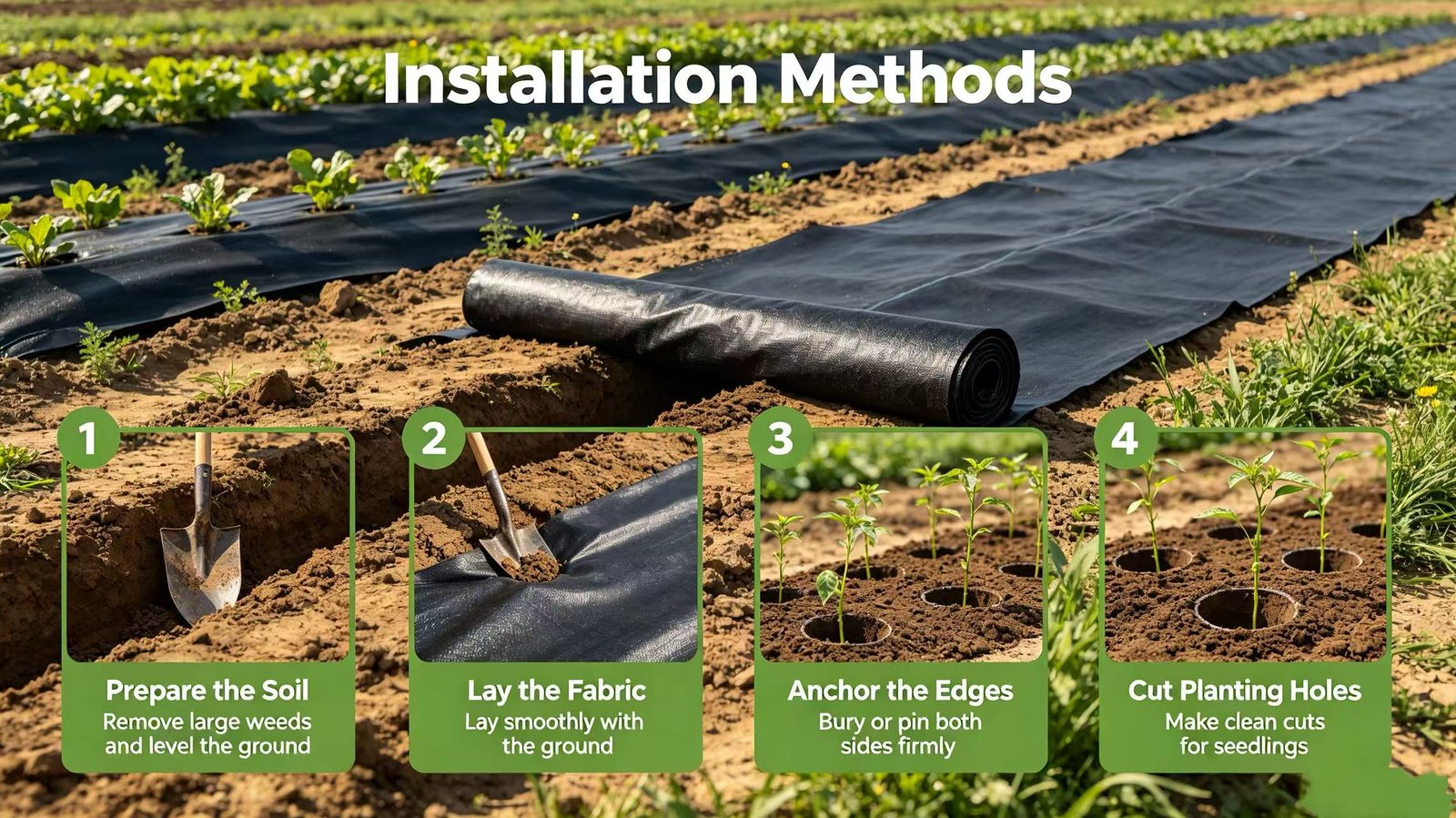
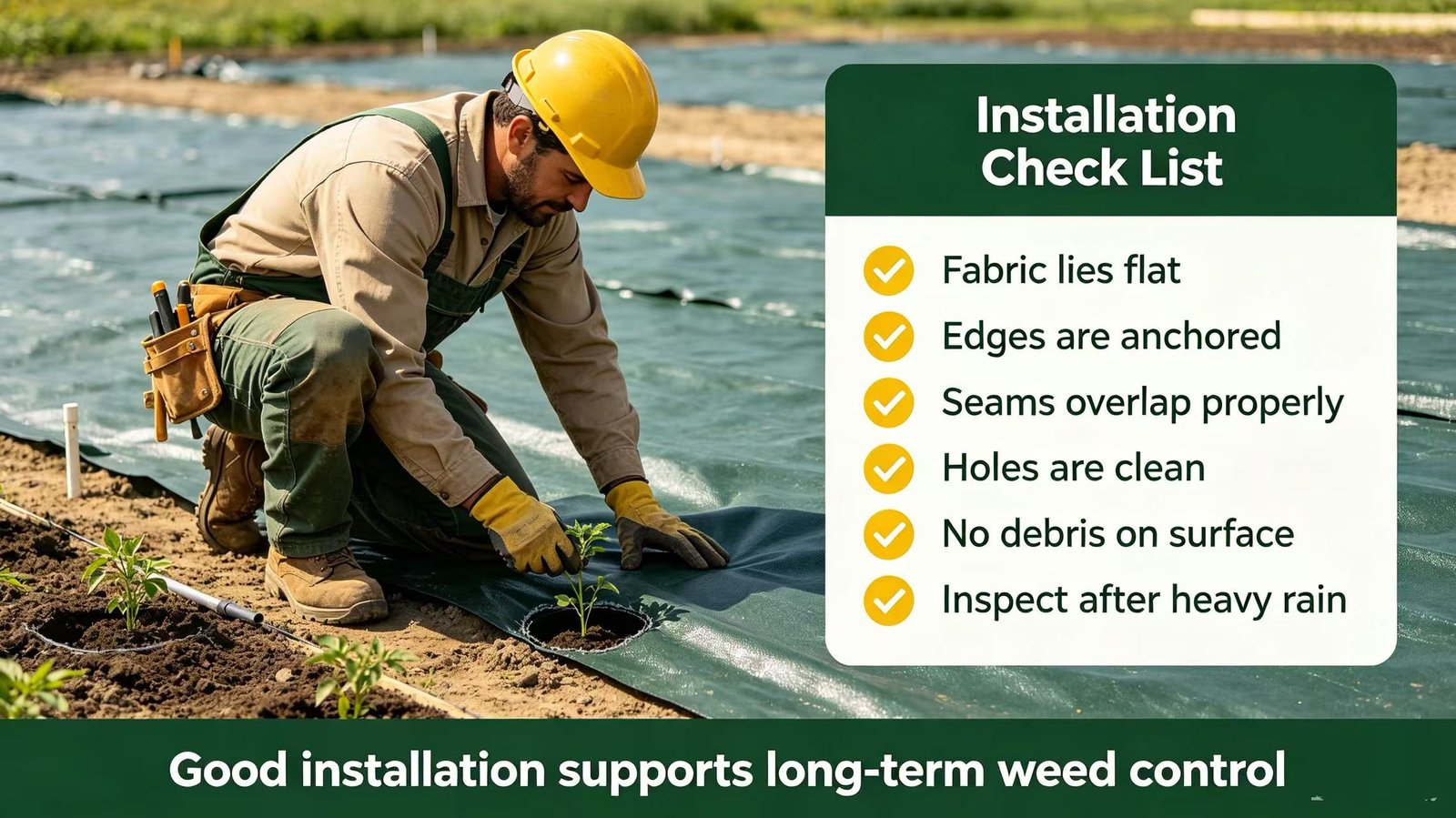
- Clear the ground. Remove visible weeds and address established perennial patches before laying the fabric. Take away sharp debris and level the surface where practical.
- Check irrigation. Confirm where the water will reach the crop. Test any line you will cover, and leave fittings accessible for servicing.
- Lay and anchor each panel. Plan overlaps and fixings for your site. Secure edges and seams so they stay closed during normal work and wind exposure.
- Keep planting openings small enough to limit exposed soil. Leave room for crop growth and maintenance. Around trees and shrubs, keep fabric and mulch away from trunks and check clearance as plants grow.
- Inspect after watering and field work. Look for pooling, lifted edges or tears. Remove soil and weeds from seams and openings before they accumulate.
Pay attention to where weeds reappear. A cluster at a seam points you to a gap or lifted edge. Seedlings growing across the surface may be rooted in debris above the fabric. Deal with the source before deciding whether the panel needs replacement. University of California Statewide IPM Program
Plan for Removal and Replacement
Plan how you will lift the fabric before you install it. For example, sections sized for your crew may be easier to retrieve than one long piece with many cutouts. Mark irrigation fittings and keep access routes clear. At the end of the intended use, collect worn material and check what your local waste service accepts. When comparing quotations, include the time needed to install, inspect and remove each option.
Frequently Asked Questions
Can I lay grass-proof cloth over established weeds?
Clear the site first. Identify persistent weeds and deal with their roots or other structures that can regrow. After laying the fabric, check seams and planting openings for new shoots.
Does rain pass through weed control fabric?
It depends on the grade and the condition of the surface. Confirm the permeability of the exact product and check what happens after watering. In addition, keep sediment from building up where water needs to pass through.
What should I send when requesting a quote?
Share the crop or application, a simple layout, the area to cover, and your preferred roll width and length. Include any planting openings, expected traffic and exposure, plus the quantity and delivery destination. Ask the supplier to confirm the exact construction, weight, permeability and anchoring requirements for your site. Request a quote from Xingke