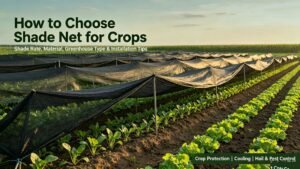
A shade net helps manage the light reaching a crop, but the best shade depends on what you grow and where you grow it. Start with the crop, growing stage and local conditions. Then compare the shading rate, material and installation requirements.
This guide helps growers and agricultural buyers prepare a clear specification. It explains how to compare options without assuming one colour or percentage suits every greenhouse, nursery or field.
What Does a Shade Net Do?
Agricultural shading fabric reduces the solar radiation reaching plants. Depending on the application, growers use it above crop rows, around nursery areas or with greenhouse structures.
However, reducing light involves a trade-off. Plants need light for growth, so a darker growing space is not automatically a better one.
Utah State University Extension discusses shading as a way to reduce sunburn risk in fruit and vegetable production. Its guidance also shows why crop response, installation and timing belong in the selection process.
What Does the Shade Percentage Mean?
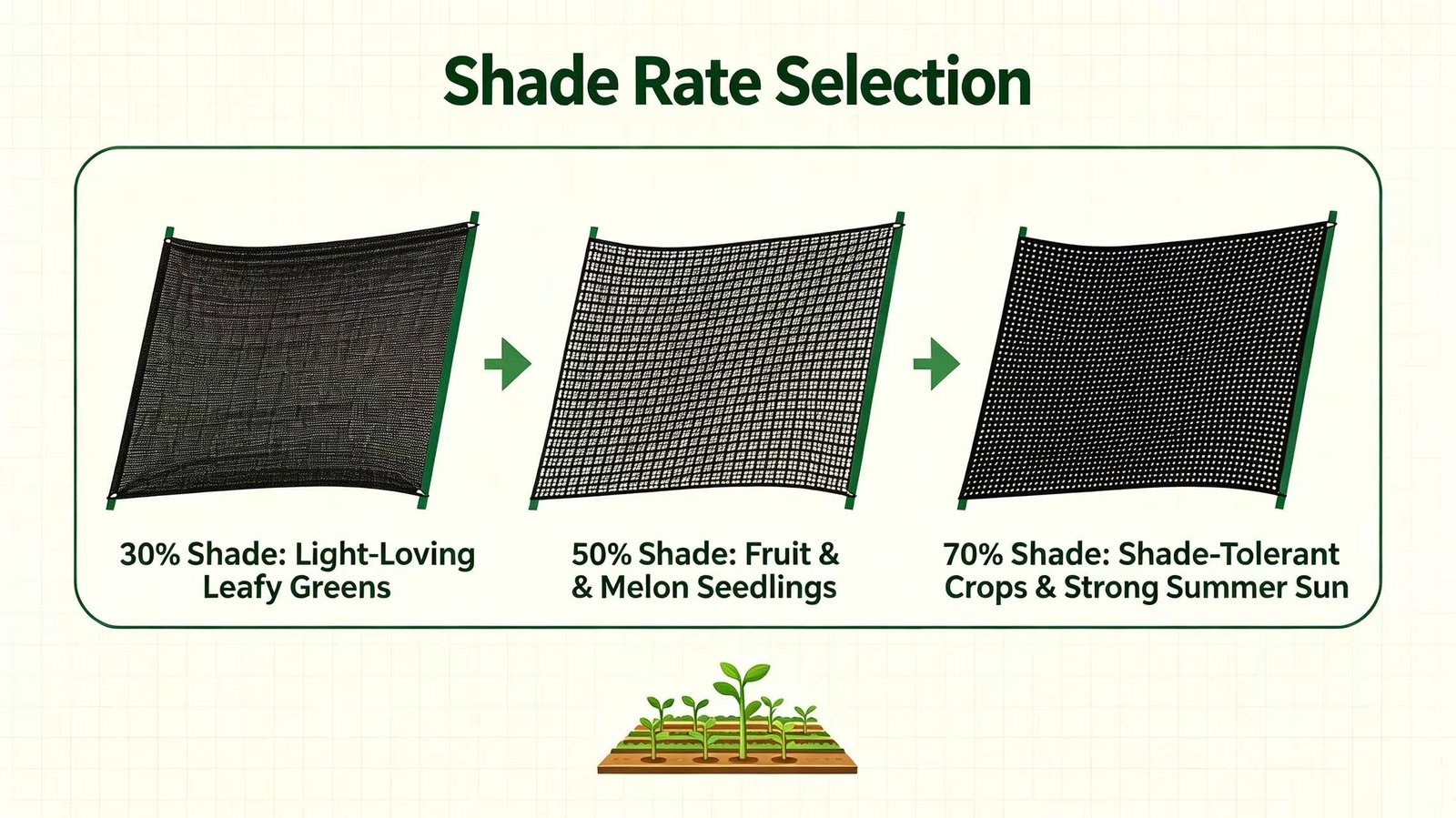
Before comparing products, ask the supplier what its shading rate measures and how it was tested. A percentage label needs a clear definition, especially when comparing different materials.
For a simple illustration, assume a rating describes the share of incident light blocked by the net alone:
| Illustrative rating | Light blocked in this example | Light remaining in this example |
|---|---|---|
| 30% shade | 30% | 70% |
| 50% shade | 50% | 50% |
| 70% shade | 70% | 30% |
These are arithmetic examples, not measurements of a particular Xingke product. Also, a 50% shading rate does not mean a 50% reduction in air temperature.
If the cloth sits above an existing greenhouse cover, measure light at crop height. The net’s label alone does not describe everything reaching the plants through the complete structure.
Choose a Shade Net for the Crop and Season
First, describe the problem you want to solve. Is exposed fruit suffering sunburn? Does a propagation area need a different light environment? Or do you need temporary protection during a period of intense sunshine?
Then consider how the crop’s needs change during the growing cycle. A useful specification should identify the crop, stage, location and period of use.
Utah State’s guide discusses a 20–40% shading range for many fruit and vegetable situations. Treat that as contextual guidance rather than a rule for every crop or region. A proposed installation still needs a local check.
For a practical discussion with your adviser or supplier, prepare:
- Crop and variety, including its growing stage.
- Open-field, nursery or greenhouse conditions.
- The months and hours when protection is needed.
- Existing covering materials and nearby obstructions.
- Observations of crop quality and the current growing environment.
This information helps define the best shade for the application before you compare quotations.
Compare Material, Colour and Product Data
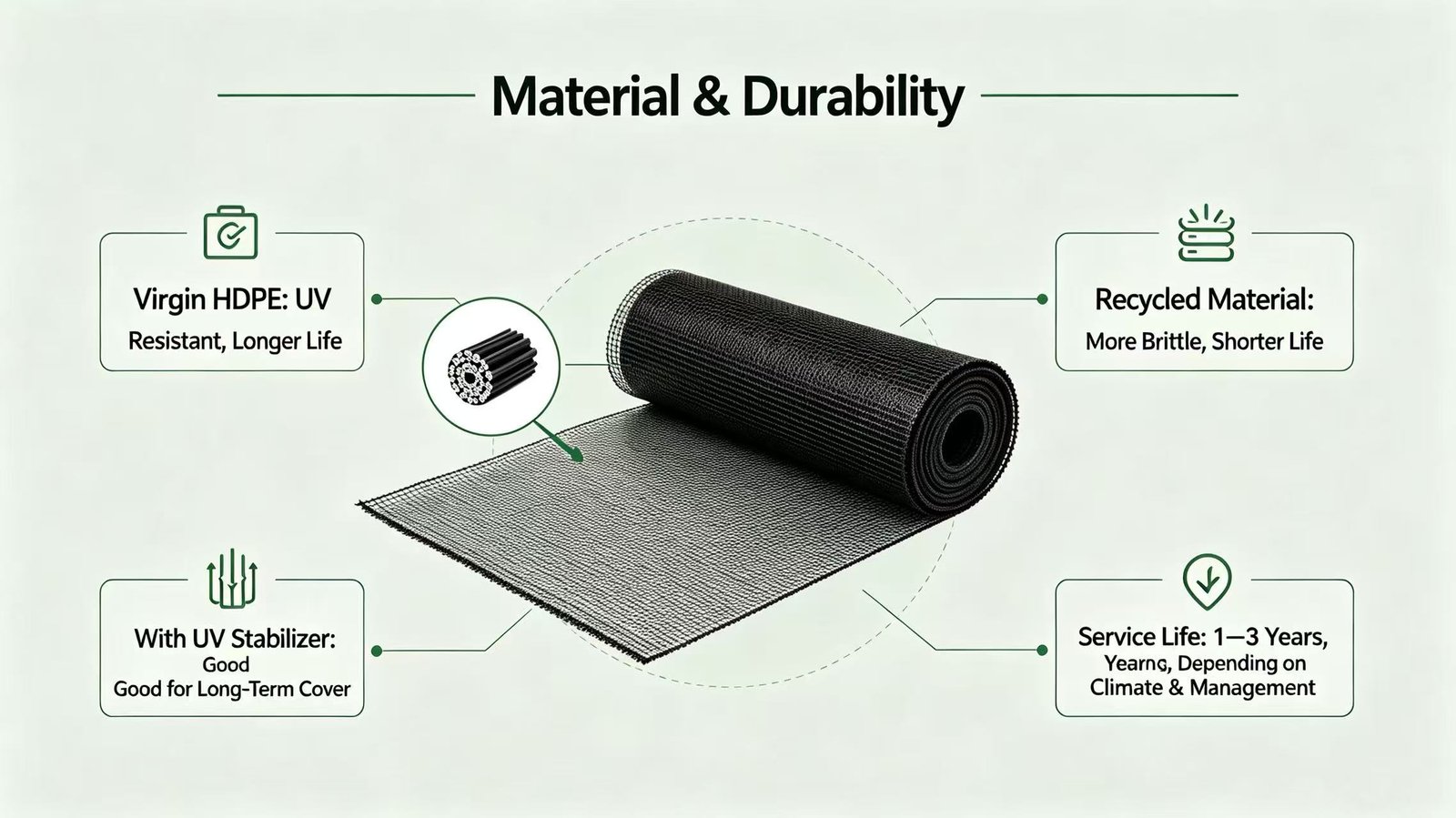
Material and resistance to exposure
Ask for the material, fabric construction and intended outdoor use. Also request the supplier’s information about resistance to sunlight and weathering.
Do not turn a general “UV resistant” description into a guaranteed service life. Likewise, a claim about the material’s durability is different from a tested claim about how much UV reaches the crop.
The Xingke shade net product page lists HDPE with a UV stabilizer and asks buyers to confirm the selected specification in the quotation. Use that confirmation to record the actual product you are ordering.
Colour and light characteristics
Colour can influence how netting transmits or scatters light. However, colour names alone do not establish equivalent performance between products.
Utah State’s guidance discusses differences in the light environment under coloured and reflective fabrics. Therefore, ask for relevant measurements when comparing those options. Avoid choosing a product solely because a colour looks lighter or darker.
Fabric weight and finished dimensions
Record fabric weight separately from the shading rate. Do not assume two products with the same weight provide the same light reduction.
Similarly, distinguish roll width from the finished panel size. A useful quotation should state whether measurements include edge finishing and how the finished product will fit the support structure.
Plan the Shade Net Installation Before Ordering
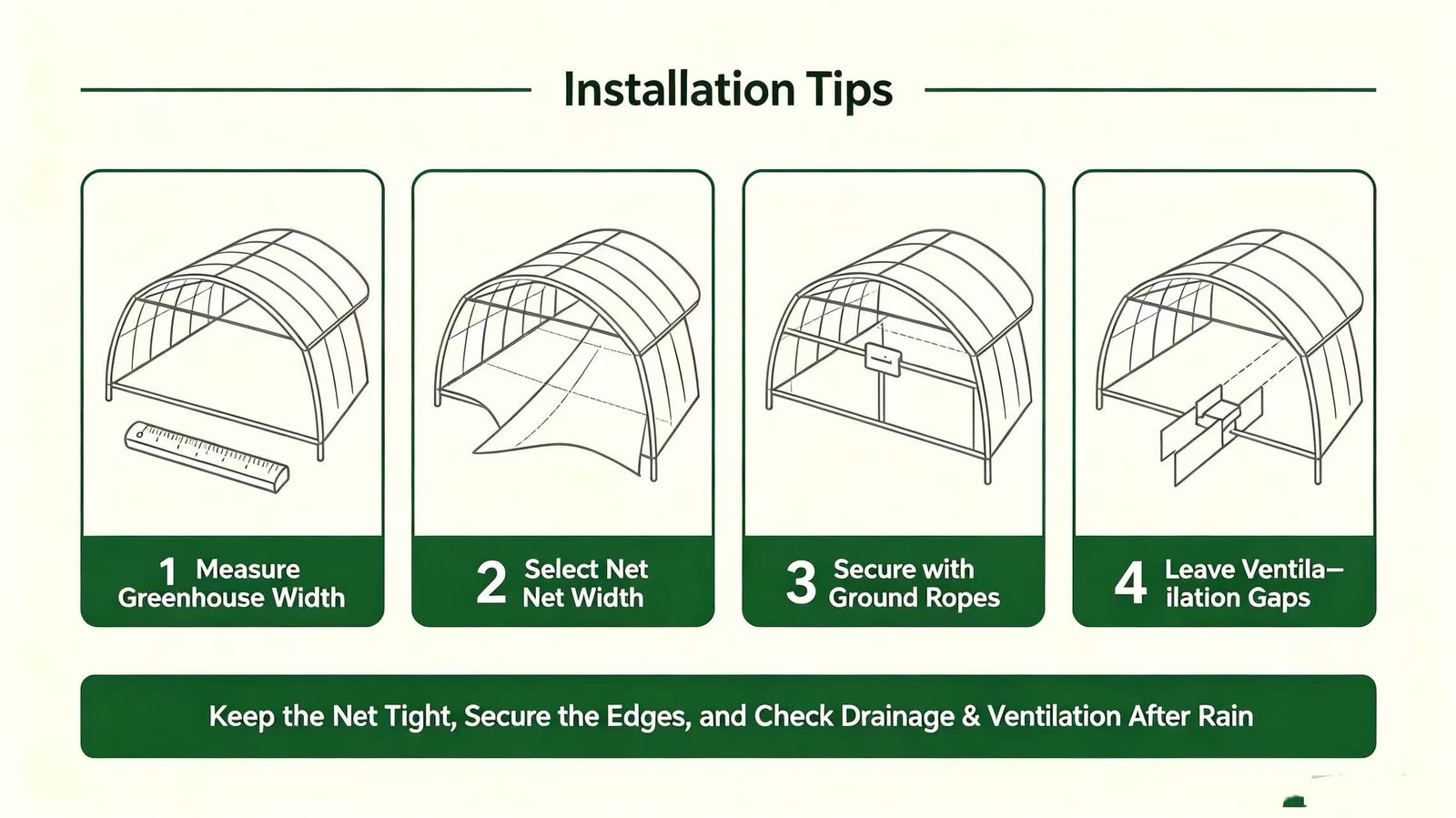
The selected fabric must suit the structure and the way workers will use the area. Therefore, prepare a simple drawing before confirming panel sizes.
Include the covered footprint, attachment positions, access routes and any parts that need to open or move. For greenhouse projects, also identify vents and other equipment that must remain usable.
Discuss these details with the installer:
- Required roll or panel dimensions.
- Edge reinforcement and fixing arrangements.
- Clearance for plants, workers and equipment.
- Whether the installation will be permanent or removable.
- Site exposure and the support structure’s design requirements.
A fabric purchase does not confirm that an existing frame is suitable. Have the proposed attachment and support arrangement checked for the site conditions.
For projects using several agricultural materials, Xingke’s greenhouse agriculture solutions page provides a starting point for coordinating covering, screening, shading and irrigation.
Find the Best Shade Through a Small Trial
If practical, compare a trial section with a similar unshaded area. Keep the crop and management conditions as comparable as possible, and record differences that could affect the result.
Useful observations include:
- Light at crop height, using a suitable meter where available.
- Air conditions and visible crop stress.
- Root-zone moisture and irrigation adjustments.
- Growth, flowering, fruit quality or another crop-specific outcome.
- Ease of access, fixing performance and signs of wear.
However, a short trial cannot establish a multi-year lifespan. It also cannot prove that the same result will occur in another season.
A May 2026 UConn Extension factsheet recommends strategic use of shade alongside ventilation and sound water management during heat stress. Therefore, assess the whole growing environment rather than judging success only by a cooler-looking space.
Coordinate Shading With Irrigation and Crop Checks
After installing cover, check the root zone before continuing the old watering schedule. Weather, crop stage and the changed growing environment may require a different routine.
UConn’s guidance emphasizes soil moisture monitoring and early management of drought stress. Use those observations to adjust irrigation rather than assuming the net removes the crop’s water needs.
Also check the installation regularly. Inspect attachment points, edges and areas that rub against the frame. Record damage and follow the supplier’s cleaning, removal and storage instructions.
For container and propagation projects, review the intended layout alongside Xingke’s horticultural nursery solutions.
What to Include in a Shade Net Inquiry
A clear inquiry makes products easier to compare. Send the following details, marking undecided items as questions:
| Requirement | Information to provide |
|---|---|
| Growing application | Crop, stage, location and growing structure |
| Light requirement | Proposed shading rate and the basis for choosing it |
| Material specification | Material, construction, colour and required product data |
| Finished size | Roll or panel dimensions, edge finishing and fixing requirements |
| Site conditions | Installation arrangement, exposure and planned period of use |
| Order details | Quantity, packing preferences, destination and required timing |
Finally, compare quotations on the same specification. Confirm availability, product details and order terms before placing the order.
Frequently Asked Questions
What is the best shade net for vegetables?
There is no single option for every vegetable. Match the shading level to the crop, stage, season and existing light conditions. Then check the proposed choice in a representative growing area.
Is a higher shading percentage always better?
No. More light reduction can be unsuitable for a crop that needs a brighter environment. Choose the level to meet the growing objective rather than seeking the darkest available fabric.
Can shading replace greenhouse ventilation?
No. Plan shading alongside ventilation and irrigation. Reducing incoming radiation does not remove the need to manage the rest of the growing environment.
How long will the netting last?
Service life depends on the selected product, exposure, installation and handling. Request the supplier’s stated terms for the exact specification instead of assuming a lifespan from colour or weight.
Discuss Your Shade Net Requirements With Xingke
The best shade starts with a clear crop requirement and a suitable installation plan. Compare the light specification, material and finished size together, then confirm the details for your project.
Contact the Xingke team with your application, proposed shading rate, dimensions, quantity and destination. Ask the team to review the available options and confirm the selected specification in writing.