Mulch film covers the soil around a crop to help manage growing conditions. However, choosing plastic mulch involves more than finding a roll that fits the bed. Colour, thickness, irrigation and removal plans all affect whether the film suits your field.
Start with the crop, planting season and bed layout. Then compare the film specification with the work it needs to do. This guide explains the main buying decisions, from selecting a colour to preparing a clear quotation request.
What Is Mulch Film Used For?
Growers lay mulch film over prepared soil and plant through openings in the covering. The film stays close to the bed rather than forming a roof over the crop.
It can help limit evaporation, alter soil temperature and keep produce away from direct soil contact. Suitable opaque films also help suppress weeds beneath the covered area. However, these benefits depend on film type and crop management. Mulching does not remove the need for irrigation or field inspection. NC State Extension discusses these benefits alongside the additional costs and management involved.
Mulch film also differs from greenhouse covering film. One covers the soil; the other covers a growing structure. For crop-bed applications, see the Xingke agricultural film range.
Choose Mulch Film for the Crop and Season
First, decide what problem you need to manage. Are you preparing a cool spring bed, reducing weed competition or trying to avoid extra soil heating?
A film that suits an early planting may be less suitable during hot weather. Likewise, a product chosen for one crop should not automatically become the standard for every field.
Write down the crop, planting date and expected harvest period before comparing rolls. Also note the local climate, soil conditions and available irrigation. These details give your supplier a practical starting point.
For a new application, consider a manageable trial before committing the full planting area. Record the specification, laying conditions and field observations so you can compare results meaningfully.
Compare Plastic Mulch Colours
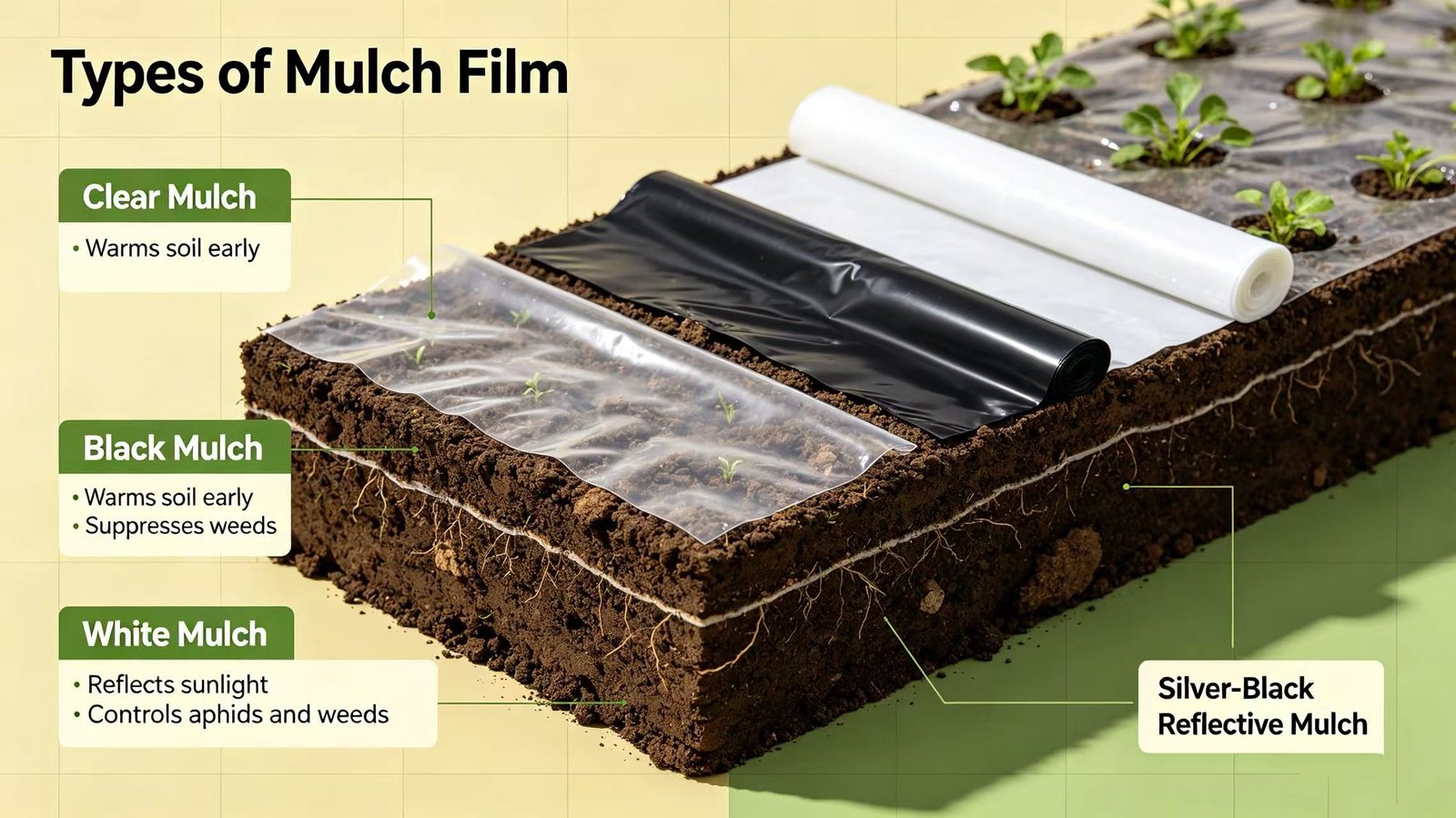
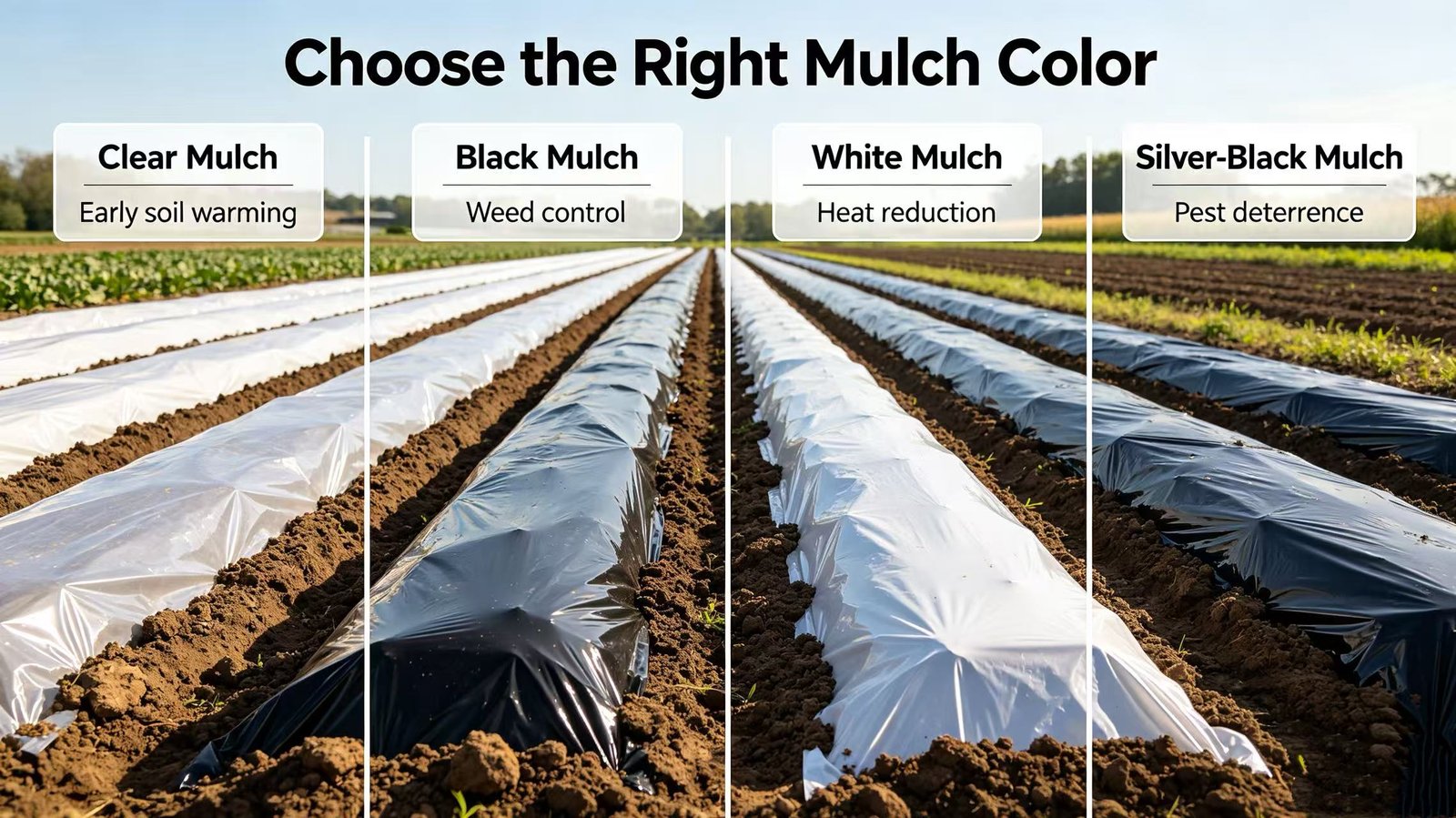
Colour affects how a film interacts with sunlight and soil temperature. It also influences weed management. Therefore, choose colour for the growing task rather than appearance alone.
Black mulch film
Black plastic mulch is a common option for warming soil and blocking light beneath the covered bed. However, weeds can still emerge through planting holes and in uncovered areas. Include those spaces in your weed-management plan.
Clear film
Clear film allows light through and can provide strong soil warming. That same light can support weed growth underneath. As a result, clear film needs a separate weed-management strategy; it is not interchangeable with opaque black film.
White and reflective films
White films reflect sunlight and can help limit soil heating during warmer periods. Silver or reflective films serve other crop-management purposes, so confirm the selected construction and intended use.
Utah State University Extension describes these colour differences. Actual performance varies with the product, weather and field conditions, so avoid treating a published temperature change as a universal guarantee.
| Film option | Main consideration | Question before ordering |
|---|---|---|
| Black | Soil warming and light exclusion | Does the planting need extra soil warmth? |
| Clear | Soil warming with light transmission | How will weeds beneath the film be managed? |
| White or white-on-black | Reflective surface for warmer conditions | Which surface faces upward, and is the film opaque? |
| Silver or silver-black | Reflective surface with a specific crop-management purpose | What evidence supports the intended application? |
Ask for a clearly identified sample. Similar-looking rolls may have different constructions, thicknesses or surface finishes.
Match Mulch Film Thickness to the Job
Thickness is important, but it does not describe the whole product. Material formulation, handling and installation also influence how a film performs.
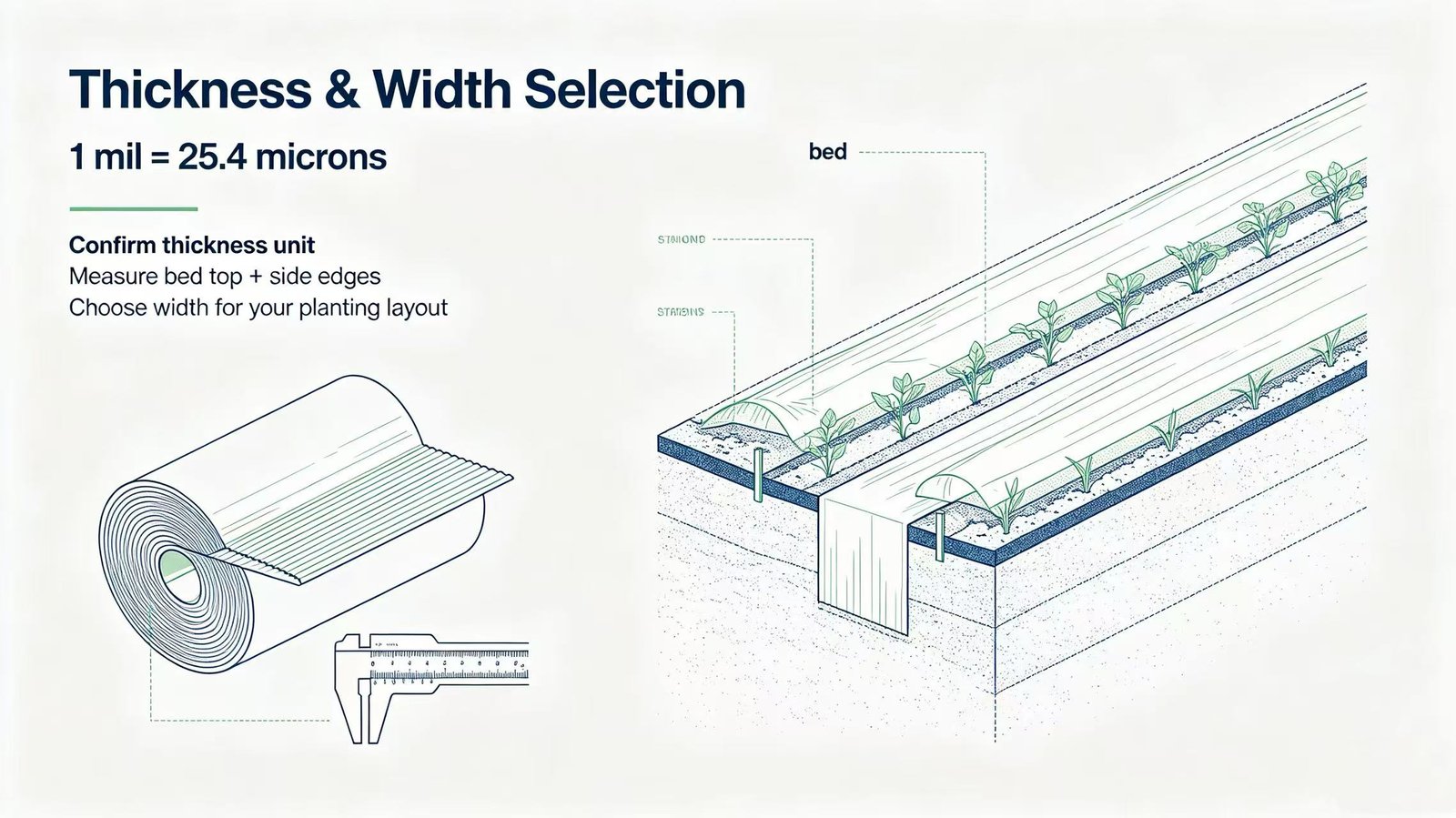
Ask suppliers to quote thickness in the same unit. A micron is one thousandth of a millimetre. By contrast, a mil is one thousandth of an inch. One mil equals 25.4 microns, so confusing these units can lead to a very different order.
Also confirm the thickness tolerance and measurement method. A nominal number alone may not explain the variation allowed across the roll.
Discuss the growing period, bed surface and laying equipment before selecting a specification. A thicker film may change the purchase cost and handling, but thickness alone cannot establish a guaranteed service life. Request the selected product’s performance information and written terms.
Calculate Width and Roll Quantity Before Buying
The bed-top width is only part of the required film width. The film must also cover the sides and leave enough material for the chosen anchoring method.
Therefore, measure the formed bed rather than copying the width from an old order. Send a cross-section drawing if the layout is unusual. Check that the roll width and core suit your laying equipment as well.
For quantity, start with the total length of beds that need covering. Then add the allowances agreed for row ends, joins and handling.
Illustrative calculation: Suppose a field has 20 beds, each 100 metres long. The basic film requirement is 2,000 linear metres. If each roll provides 500 usable metres, that equals four rolls before allowances. This example assumes one strip per bed and does not include installation losses.
Do not estimate the order from field area alone. Bed spacing, row length and uncovered paths can change the quantity substantially.
Plan Irrigation Beneath Plastic Mulch
Solid plastic film changes how rain and overhead water reach the covered soil. Plan a reliable way to supply the crop before laying the film.
Drip irrigation is commonly paired with plastic mulch. Place and test the lines as part of bed preparation, then check that the wetting pattern reaches the intended root zone. The correct line position depends on soil and crop layout.
NC State’s plastic mulch and irrigation guidance stresses that reduced evaporation does not replace irrigation. Continue checking soil moisture and crop needs after covering the beds.
For the irrigation component, our drip tape selection guide explains the separate choices of size, emitter spacing and flow. Coordinate the tape and film specifications before placing either order.
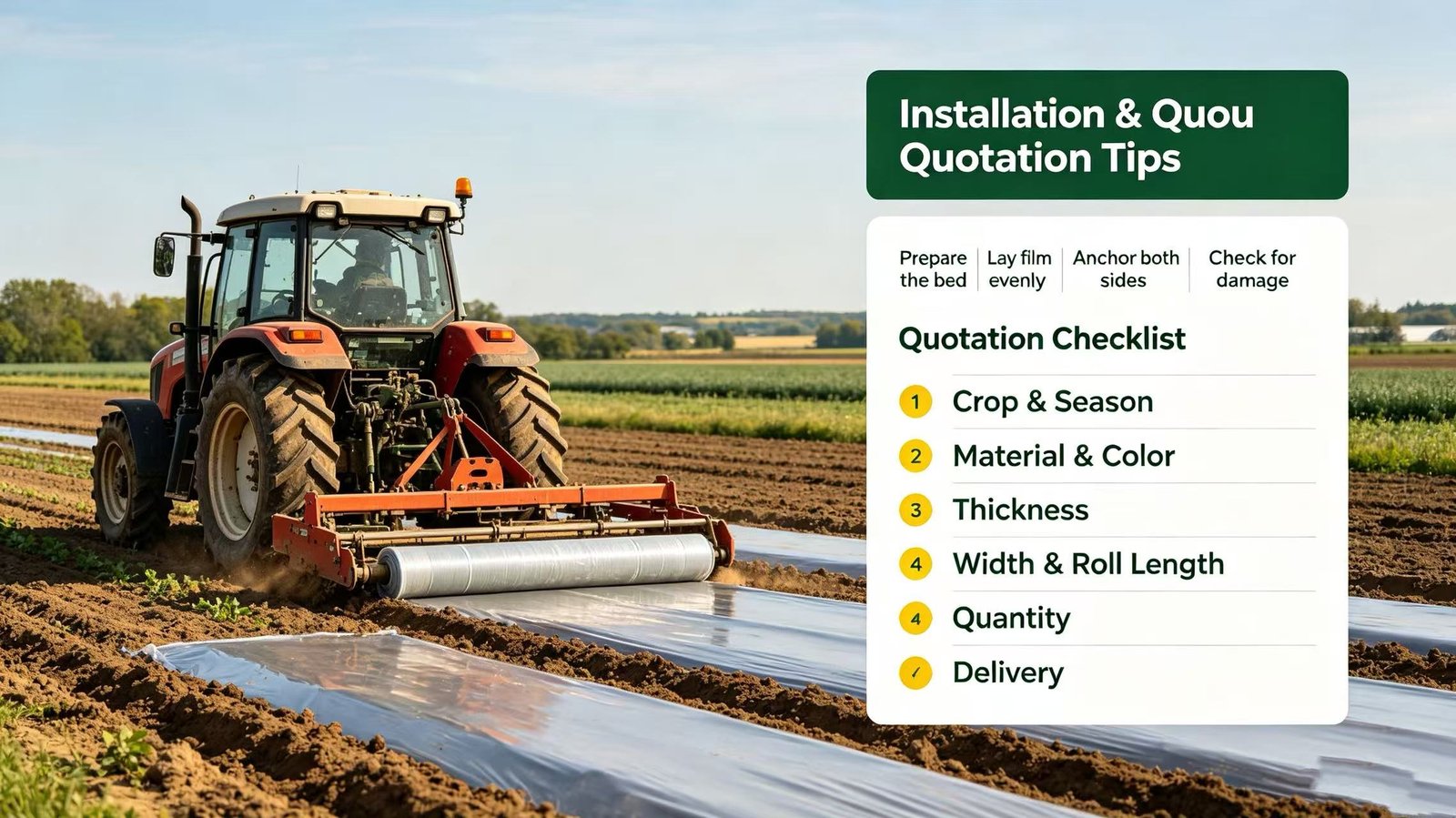
Prepare the Bed and Install Mulch Film Carefully
A clear installation plan helps prevent avoidable problems with fit and handling. Confirm the method for the selected material rather than assuming every film tolerates the same tension.
- Prepare the bed. Create the intended shape and remove sharp debris from contact areas.
- Check moisture and drainage. Avoid using the film to conceal an unresolved bed-preparation problem.
- Position irrigation. Test the system and check the planned planting rows.
- Adjust the laying equipment. Check roll alignment, tension and edge coverage against supplier instructions.
- Secure the edges and ends. Use the agreed anchoring method for the field conditions.
- Check the first section. Inspect the fit before laying the rest of the field.
After planting, inspect for lifted edges, tears and problems around planting holes. Also check after windy weather or field operations. Keep records of repeated defects so you can discuss the cause with your supplier.
Separate PE Film from Soil-Biodegradable Film
Conventional polyethylene, or PE, film and soil-biodegradable film need different plans after use. Do not assume that a product can remain in the soil because it is thin or begins to break into pieces.
Washington State University Extension’s publication, revised in May 2026, explains the distinction between PE mulch and soil-biodegradable materials. A biodegradability claim needs evidence for the intended environment. A claim about composting does not by itself establish how a product will behave in agricultural soil.
Before buying a soil-biodegradable product, request documentation for the exact film. Also confirm its intended use, installation instructions and management after harvest. Avoid assuming that every climate or soil will produce the same breakdown time.
For conventional PE, plan retrieval and an appropriate waste-management route. The New England Vegetable Management Guide notes that soil and plant contamination can make used film difficult to recycle. Check what a local collection operator will accept before treating recycling as an available option.
Compare the Whole Seasonal Cost
A low roll price does not necessarily give the lowest cost for your crop. Compare quotations on the same usable width, length, thickness and material before judging value.
Include laying, repairs, removal and the available waste-management route in your budget. For a different film type, check whether you also need different equipment settings or handling procedures.
Finally, separate confirmed figures from assumptions. Use actual labour rates and supplier quotations where available. A useful comparison makes those inputs visible rather than promising that one film will always be cheaper.
What to Include in a Mulch Film Quotation Request
Send a short specification that connects the crop plan with the product requirements.
| Item | Details to provide |
|---|---|
| Application | Crop, location, planting season and growing period |
| Material | PE or the specific alternative you want evaluated |
| Colour | Required colour and surface orientation |
| Thickness | Unit, nominal thickness and tolerance to confirm |
| Dimensions | Film width, roll length, core and finished bed profile |
| Planting layout | Rows, spacing and any required hole pattern |
| Quantity | Estimated linear metres or roll count |
| Delivery | Destination and preferred timing |
Ask about a representative sample and the documents available for the selected specification. Sample availability, charges and delivery arrangements need confirmation.
To discuss mulch film for your project, send your requirements to the Xingke team. Include the bed dimensions and laying method where possible. Confirm the final specification, order quantity and supply terms in the quotation.
Frequently Asked Questions
Is mulch film the same as plastic mulch?
The terms often overlap in agricultural use. Mulch film describes the thin covering laid on soil, while plastic mulch describes its use as a plastic ground cover. Check the material and application rather than relying on the name alone.
Which mulch film colour is best for vegetables?
There is no single best colour for every crop and season. Start with soil-temperature needs, weed management and planting conditions, then compare suitable films.
Can I leave ordinary plastic mulch in the soil?
Conventional PE film needs a retrieval plan. Do not treat fragmentation as proof of biodegradation. Only consider incorporation when the exact product is intended and supported for that use.
Does mulch film remove the need for watering?
No. It can reduce evaporation, but crops still need a managed water supply. Check soil moisture and adjust irrigation to the crop and growing conditions.