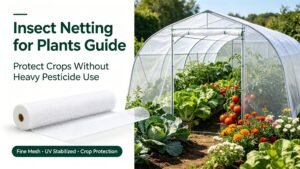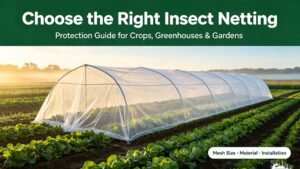
Insect-proof netting helps protect crops by creating a physical barrier against target pests. However, effective insect netting needs more than a fine-looking weave. The openings must suit the insect, the structure must allow enough airflow, and the installation must close entry gaps.
Start with the crop and pest you need to protect against. Then compare the net’s opening dimensions, ventilation data and fixing method. This guide explains those choices for vegetable beds, crop tunnels and greenhouse openings. It also explains how agricultural netting differs from bug nets for porch use.
What Does Insect-Proof Netting Actually Do?
The net separates a crop from insects outside the covered area. Growers can fit it over beds, attach it to tunnel frames or screen greenhouse vents.
However, the term “insect-proof” describes an intended use, not a promise to stop every insect. Results depend on the target species, the net and the complete enclosure. A suitable screen cannot compensate for an open door or a torn seam.
Oklahoma State University Extension includes screening within integrated pest management. Its guidance pairs physical barriers with suitable mesh, adequate airflow and checks on incoming plants. Netting therefore supports a wider prevention plan rather than replacing crop inspection.
For agricultural applications, explore the Xingke insect net range. Confirm the selected specification against your own growing conditions before ordering.
Choose Insect Netting for the Target Pest
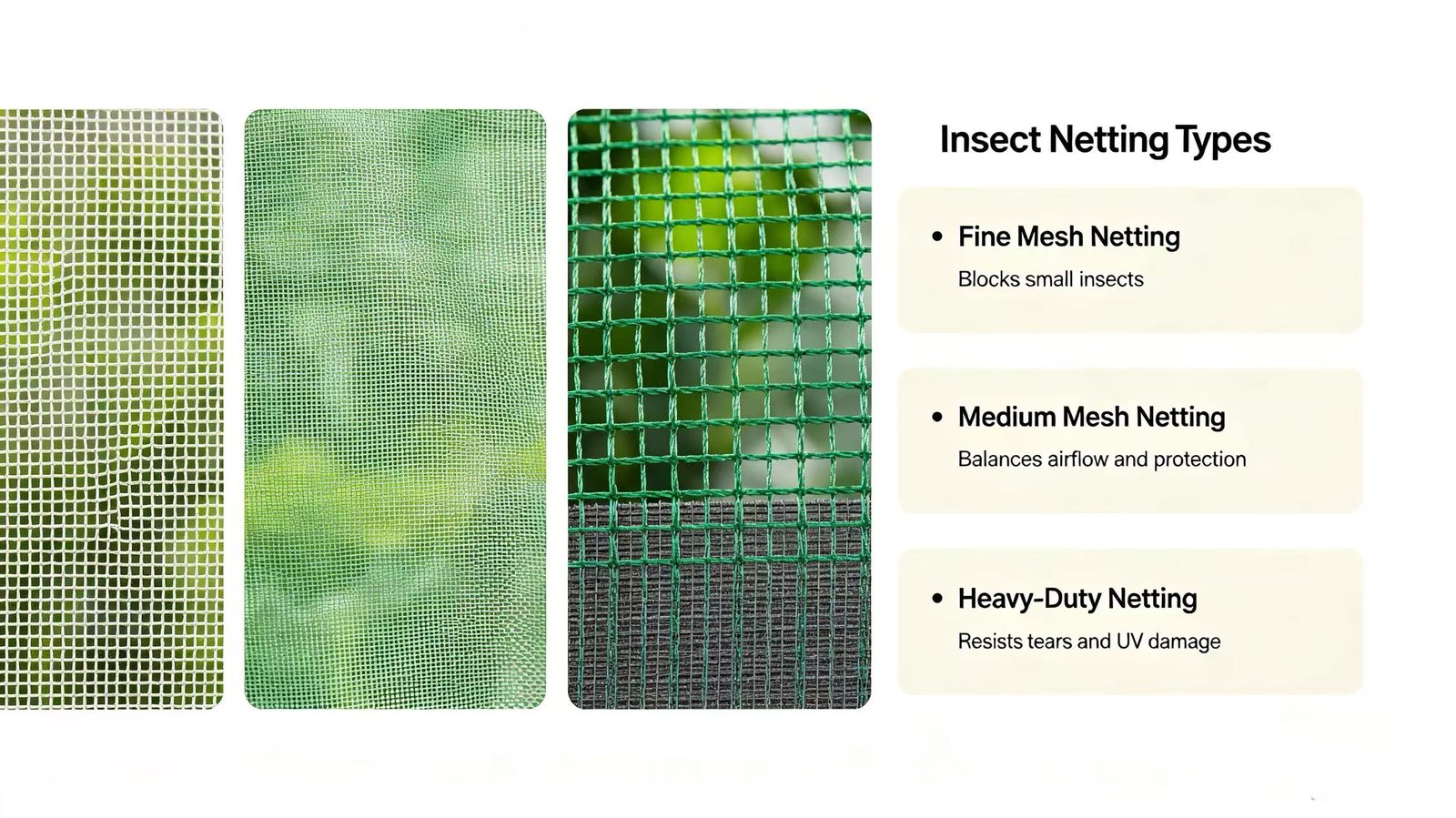
First, identify the pest you need to exclude. A net intended to stop larger flying insects may leave openings that smaller insects can pass through.
If several pests threaten the crop, discuss the smallest target species with your supplier or local crop adviser. Ask for evidence relevant to that species. A general label such as “fine mesh” does not provide enough detail for a buying decision.
Also check whether pests are already present on plants or inside the growing area. Closing an enclosure around an existing infestation does not remove it. Inspect planting material and address detected pests before relying on the barrier.
Use this short brief when discussing a specification:
- Crop and growth stage.
- Target pest species, supported by photos or an identification where possible.
- Open bed, crop tunnel or greenhouse application.
- Local growing season and ventilation method.
- Existing pest pressure and inspection routine.
This information gives a supplier a clearer task than asking for the smallest available mesh.
Compare Insect Netting Openings, Not Just Mesh Count
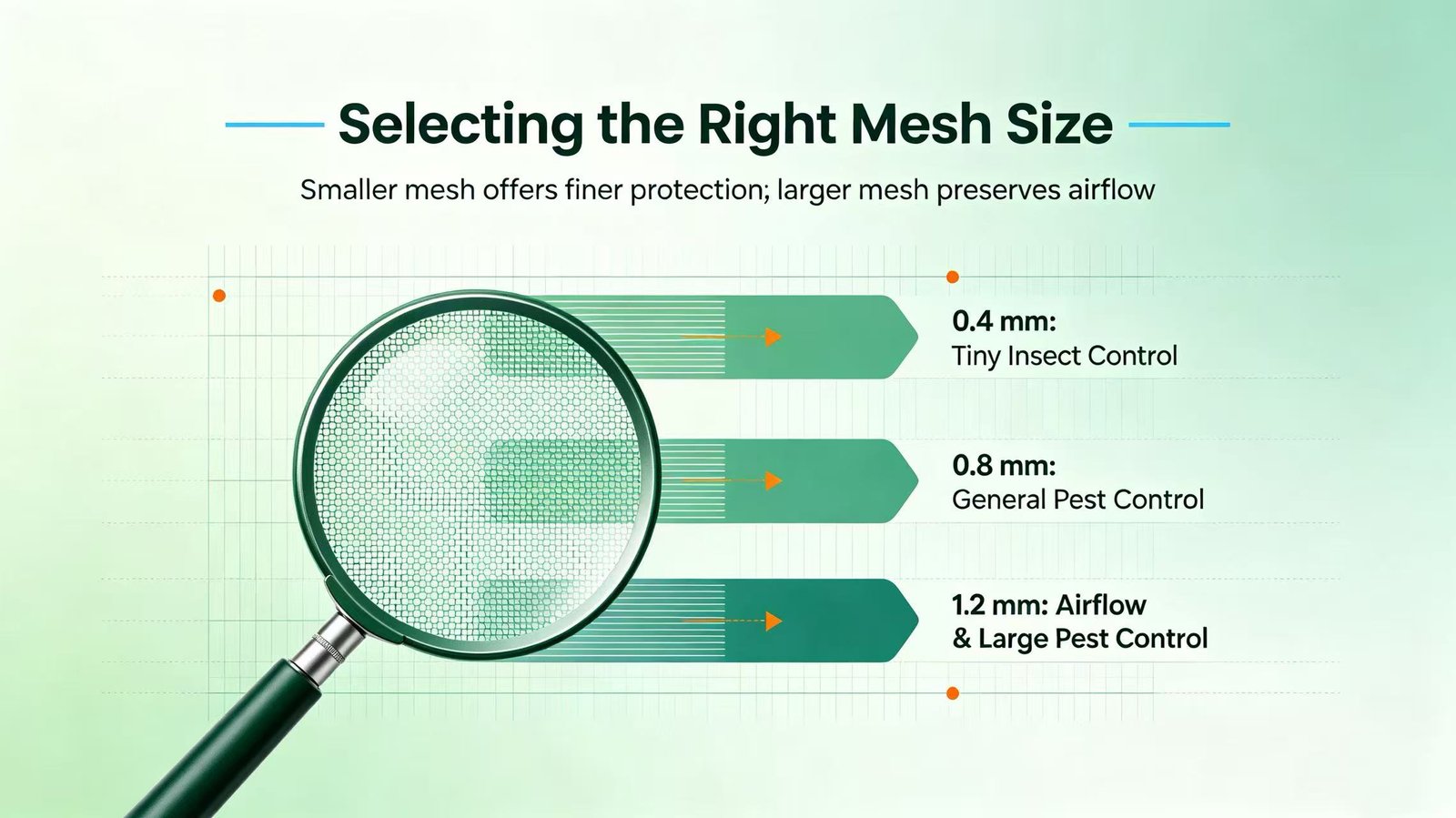
Mesh count is useful, but it does not fully describe the open space between threads. Thread thickness and the weave also affect the opening. In addition, ask for both dimensions of rectangular openings in millimetres or micrometres.
For example, two quotations may use the same mesh label but describe different fabrics. One may have thicker threads or a different opening shape. Compare the actual specification sheets before treating the products as equivalent.
| Detail to compare | What to request | Why it helps |
|---|---|---|
| Mesh description | Count and the supplier’s measurement convention | Makes different quotations easier to interpret |
| Clear opening | Opening dimensions in both directions | Helps assess suitability for the target pest |
| Thread diameter | Diameter and construction details | Explains differences in open area |
| Airflow performance | Test method and conditions, where available | Supports ventilation planning |
| Finished dimensions | Usable width, length and edge allowance | Supports a workable installation plan |
Avoid choosing a universal mesh number for every crop and pest. Instead, match measured openings to the intended exclusion task, then check airflow and installation needs.
Balance Insect Exclusion with Ventilation
Finer screening can restrict greenhouse ventilation. As a result, adding netting may change the temperature and humidity around the crop.
For this reason, review vent area and airflow before screening an existing greenhouse. Simply fitting a finer net over the same opening may create a new growing problem. Ask the greenhouse supplier or designer to check the proposed arrangement.
Virginia Cooperative Extension’s thrips guidance highlights this trade-off. Fine screens used for thrips exclusion reduce ventilation, require appropriate vent sizing and need cleaning to maintain airflow.
After installation, record conditions near the crop during representative warm weather. Also inspect screens for dust and debris. If you add shade cloth, review it as part of the whole growing system. Our shade net selection guide explains the separate decisions involved in crop shading.
Match Insect Netting to the Growing Structure
Vegetable beds and low tunnels
Use a frame that leaves room for crop growth and routine access. Plan how you will weed, inspect and harvest without leaving the cover open longer than necessary.
University of Maryland Extension’s vegetable garden protection guidance, updated in August 2026, distinguishes insect mesh from non-woven row cover. It recommends supporting insect mesh over a frame. Choose the covering for its intended purpose; insect mesh and frost-protection fabric have different roles.
Greenhouse vents and side openings
Measure the entire opening and include the fixing detail in your drawing. Check corners, frame joints and any moving parts. The net must remain secure while vents operate.
Screening also belongs in the broader greenhouse growing plan. Coordinate it with ventilation, crop access and routine maintenance.
Nursery and propagation areas
Plan access around plant deliveries and daily work. A screen can help limit entry through openings, but plants and equipment offer other routes. Keep inspection procedures in place when bringing material into the protected area.
Are Bug Nets for Porch Use the Same Product?
People searching for bug nets for porch usually want an outdoor seating enclosure. They may need curtain panels, a convenient doorway and a clear view. Crop growers need a screen suited to agricultural pests and growing conditions.
Ontario’s greenhouse production guidance notes that household screen openings are too large for many major greenhouse pests. Therefore, a porch screen should not automatically replace a crop-protection net.
Likewise, agricultural roll netting is not automatically a finished porch enclosure. If your project is a porch, describe that use clearly and confirm the panel dimensions, edges and entry arrangement. Ask the supplier to confirm suitability rather than assuming that any insect net will fit both applications.
Install Insect Netting as a Complete Barrier
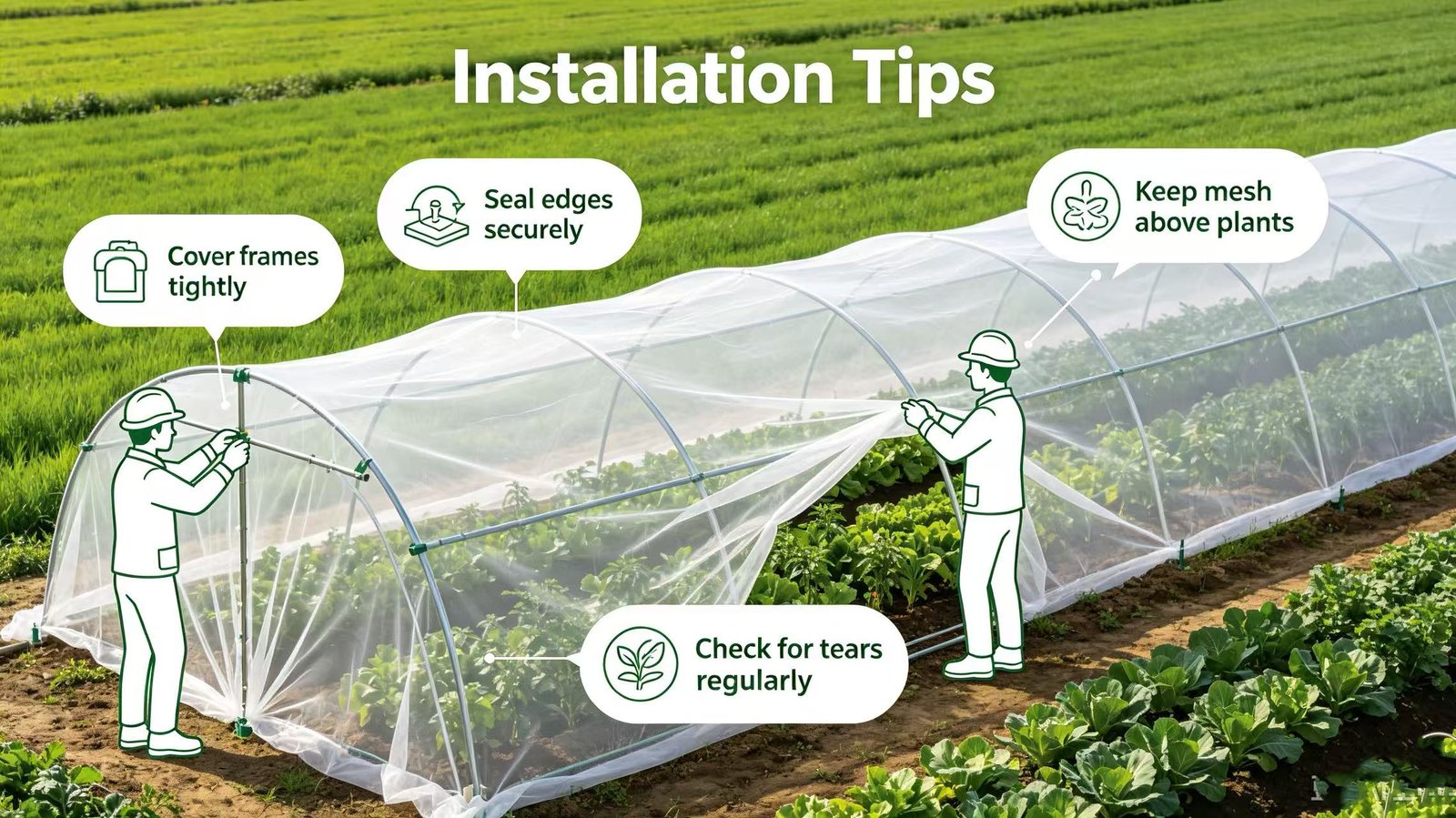
A good installation connects the fabric, frame, edges and access points into one system. Before cutting the roll, decide how each section will attach and where people will enter.
- Measure the structure. Include sides, ends, fixing allowances and access panels.
- Inspect the growing area. Check plants and deal with existing pest problems.
- Prepare the supports. Remove sharp contact points that could damage the fabric.
- Fit and secure the net. Follow the agreed fixing method and close perimeter gaps.
- Test access points. Check that workers can close them properly after use.
- Inspect during operation. Look for loose edges, holes and damage after strong wind or maintenance work.
Also, keep a simple inspection record. Note the location of each defect and repair it promptly. This makes recurring weak points easier to find before they become a larger problem.
Plan for Pollination Before Covering Flowering Crops
An insect barrier can also exclude pollinators. Therefore, the right cover schedule depends on the crop and cultivar.
University of Maryland Extension’s pollination guidance, updated in July 2026, explains this distinction for squash and cucumbers. Conventional cultivars that require insect pollination need access at flowering. Suitable parthenocarpic cultivars, which can form fruit without pollination, offer a different management option.
Check your cultivar before deciding to keep plants covered throughout flowering. If you open the cover for pollination, remember that you also open a route for pests. Include that trade-off in the crop plan.
What Should You Send for an Insect Netting Quote?
A detailed request helps suppliers quote comparable products. Send the target pest and intended use first, then add the practical order details.
| Quotation item | Information to include |
|---|---|
| Application | Crop, target pest, structure and growing location |
| Fabric specification | Required openings or an existing specification sheet |
| Dimensions | Finished sizes, roll format and fixing allowances |
| Construction | Material, colour and edge requirements to confirm |
| Quantity | Estimated area or roll quantity |
| Delivery | Destination and preferred timing |
Also ask about a representative sample. Check its weave and handling against the proposed use. Sample availability, charges, delivery and order terms need confirmation.
To discuss agricultural insect-proof netting, send your requirements to the Xingke team. Include drawings or photos of the structure where possible. Finally, confirm the material, opening dimensions and supply terms in the quotation.
Frequently Asked Questions
Does insect netting with a higher mesh count always give better results?
No. The net needs to suit the target pest while allowing adequate airflow. Compare actual opening dimensions, fabric construction and the installation plan rather than choosing by count alone.
Can insect netting remove pests already inside a greenhouse?
No. It acts as a barrier to entry. Inspect plants and manage existing pests as part of the wider crop-protection programme.
How long will the net last outdoors?
Service life depends on the chosen material, exposure, handling and installation. Ask for the selected product’s UV-stabilisation details and written terms. Do not assume that every roll carries the same outdoor life or warranty.
Can one net cover every crop on the farm?
Possibly, but check each crop’s pests, growth habit and pollination needs first. A shared specification only makes sense when it meets those requirements and the structure can maintain suitable growing conditions.