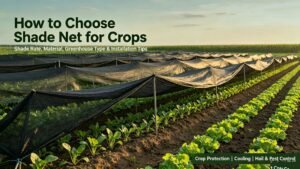
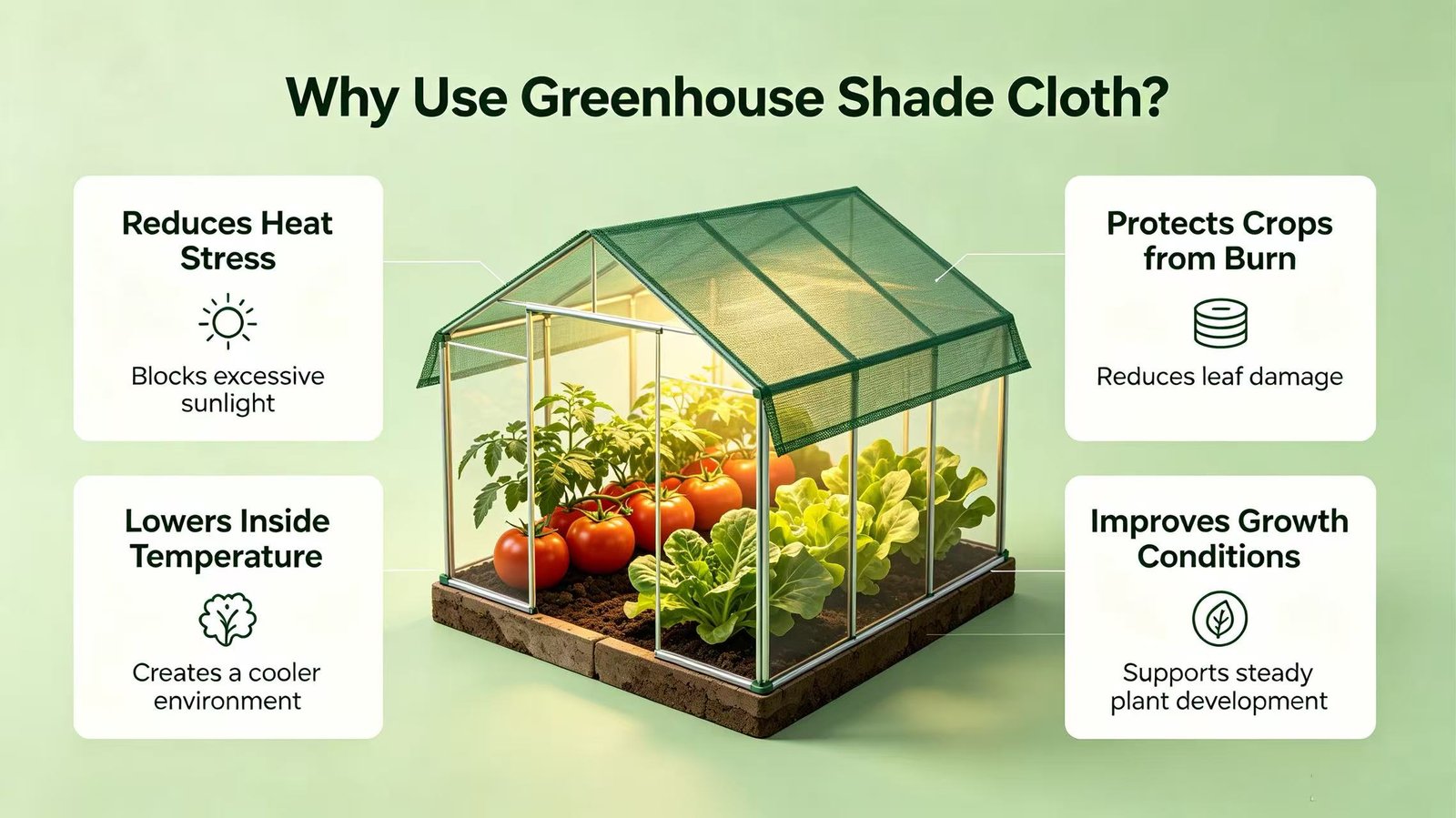
Choosing the best shade net for greenhouse crops starts with the light your plants receive and the heat you need to manage. Greenhouse shade cloth can reduce incoming sunlight, but the right specification depends on the crop, season, roof covering and ventilation layout.
Before ordering, record conditions at crop height and decide how you will adjust the shading when the weather changes. This guide explains the greenhouse-specific choices, from interpreting shade ratings to planning external panels or an internal screen.
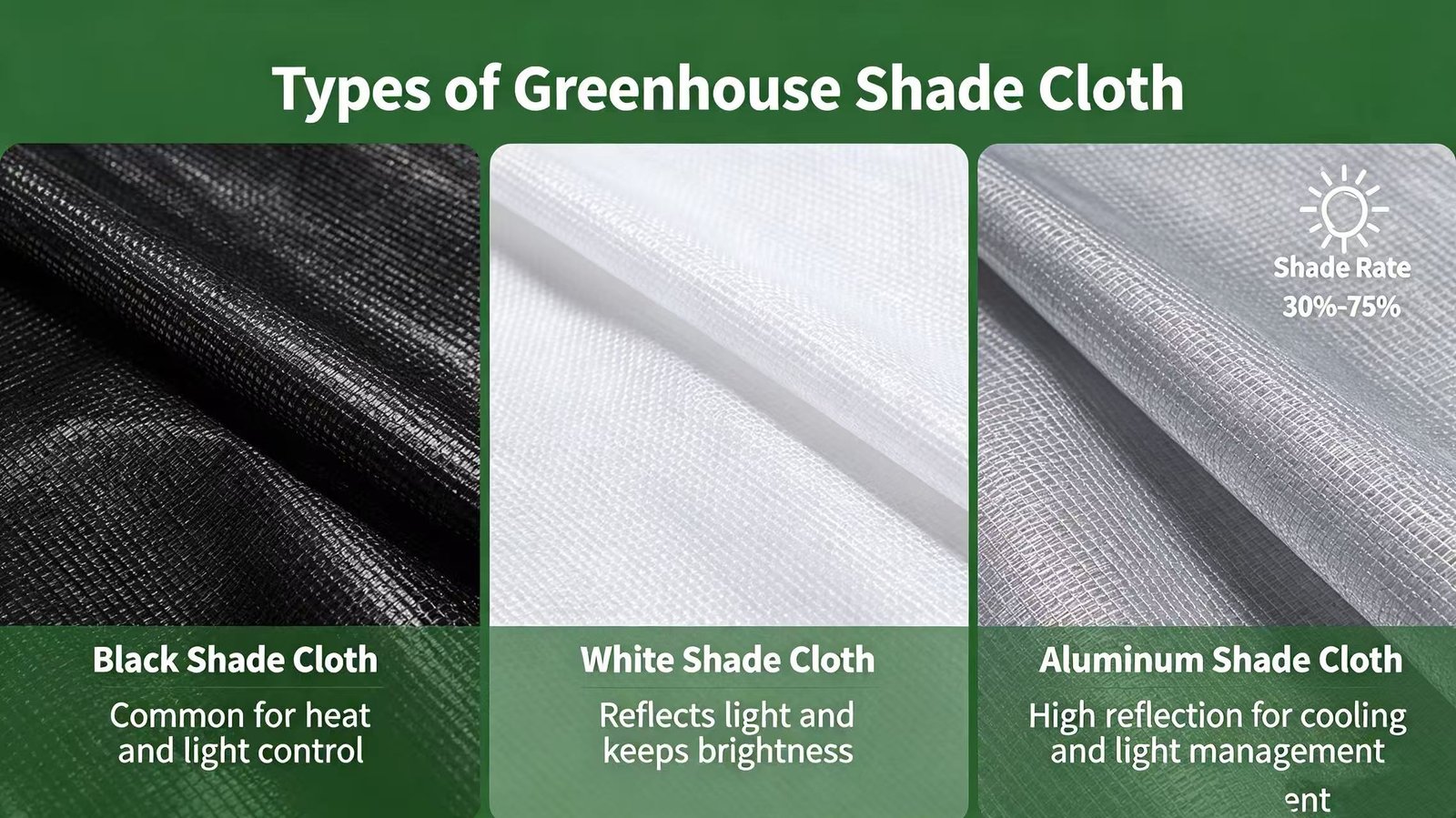
Start with Crop Light Needs
The light outside a greenhouse differs from the light at the plants. The covering, frames and overhead equipment all influence what reaches the crop. Therefore, take measurements where the plants grow before adding another layer.
Daily light integral, or DLI, describes the amount of photosynthetically active light received during a day. It gives growers a way to assess accumulated light alongside peak daytime conditions. A single reading at noon captures only one moment. Use a suitable sensor and compare the results with guidance for your crop and growth stage. Purdue Extension
Keep temperature records at the same time. A section beside a vent may behave differently from the centre of a dense crop. Also note whether a problem appears throughout the greenhouse or only in one area.
How Much Greenhouse Shade Cloth Do You Need?
A shade percentage describes the material under its stated test conditions. Ask the supplier what the figure measures and whether the specification includes a tolerance. It helps to compare products on the same measurement basis.
The amount of shading needed depends on available light, the reduction provided by the chosen material and the crop’s light requirement. Virginia Cooperative Extension uses these factors when explaining how growers can adjust DLI. Start with your greenhouse measurements and discuss a suitable range with a crop adviser. Virginia Cooperative Extension
Illustrative calculation: Suppose a roof transmits 80% of light and a shade panel transmits 70%, using comparable measurements. Multiplying 0.80 by 0.70 gives an approximate combined transmission of 56%, before accounting for frames and other installation effects. The actual crop-level result needs measurement.
This example explains why adding a shade net requires a review of the existing covering. Record the condition of the roof, then measure again after installing a trial panel.
Fit Greenhouse Shade Cloth Around Ventilation
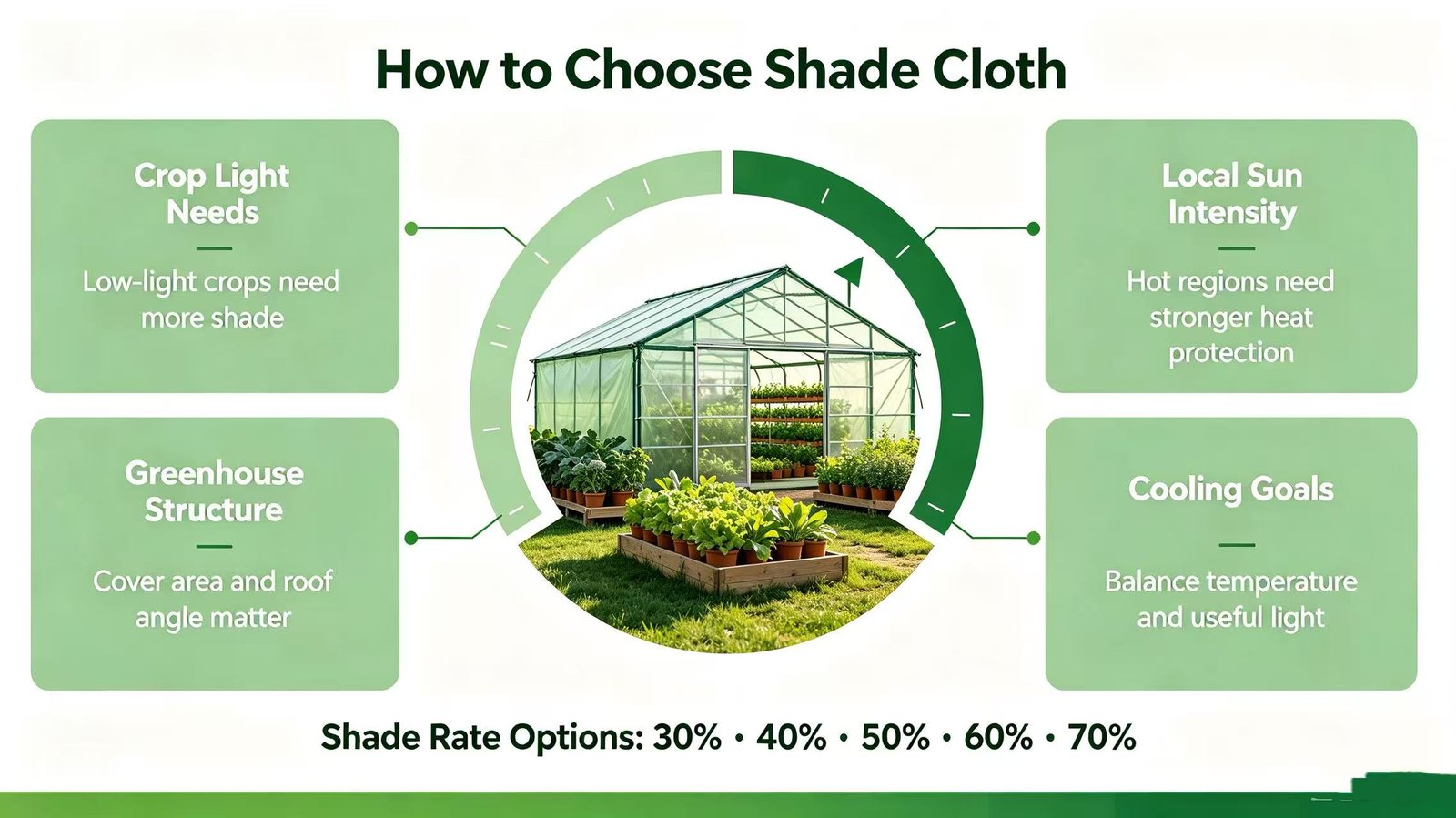
Ventilation exchanges greenhouse air with outdoor air. Shading reduces incoming radiation. Plan both together so the screen and its supports leave the intended air paths open. NC State Extension discusses ventilation, shading and additional cooling as parts of greenhouse environmental control. NC State Extension
Before fixing any panel, mark roof vents, side openings, fan inlets and moving components on a drawing. Open the vents fully and check the clearance they need. For an internal system, ask the installer how the screen position will affect air movement above the crop.
After fitting the material, compare temperature and humidity in several parts of the house. Keep the sensor locations consistent so the readings help you assess changes.
External Panels or an Internal Screen?
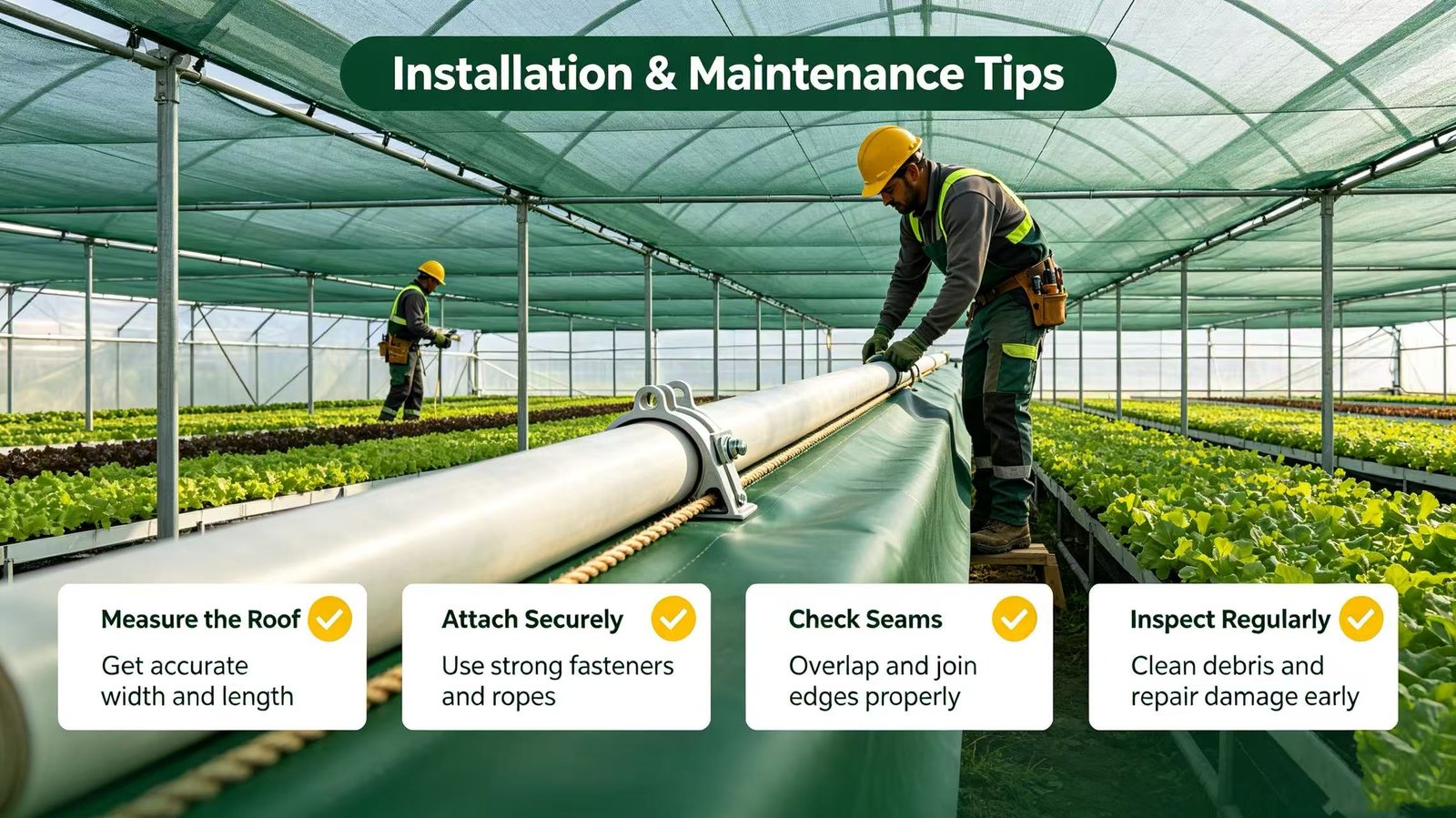
An external panel intercepts sunlight before it reaches the greenhouse covering. An internal screen sits beneath the roof and can form part of a retractable system. University of Connecticut guidance describes both arrangements and explains how movable screens allow growers to adjust shading as conditions change. University of Connecticut
| Arrangement | Planning priority | What to confirm |
|---|---|---|
| External shade net | Roof access, exposure and vent clearance | Fixings, support points and how the panel will be removed |
| Fixed internal panel | Crop clearance and access to equipment | Air paths and the light available during cloudy periods |
| Retractable internal screen | Opening, closing and storage space | Compatibility of the fabric, drive system and controls |
A retractable design can suit a house that experiences large changes in light. However, it requires space for the gathered material and a suitable mechanism. Ask whether the quoted product is a netting panel, screen fabric or a complete installed system.
Compare Material and Product Data
Request a specification for the exact material being quoted. For example, Xingke’s shade-net product page lists HDPE with UV stabilizer and several shading options. Confirm the chosen shade rate, colour, dimensions and edge requirements in the quotation. Xingke shade-net specifications
For greenhouse use, ask for the following details:
- The shade rating and its measurement basis.
- Available light-transmission or radiation data.
- Material, construction and fabric weight.
- Suitability for the intended exposure and installation.
- Finished panel dimensions, reinforced edges and attachment points.
- Written supply terms and any applicable warranty conditions.
Also compare samples. Look at the construction, edge finish and handling, then check how the proposed sample relates to the specification sheet. Keep the sample identification with the quotation so you can refer to the same grade later.
Measure Panels for the Greenhouse Shape
Measure along the intended installation surface. On an arched house, the panel follows a curve, so the ground width alone gives an incomplete dimension. Include the attachment method and any allowance the installer requires.
Next, draw the panel boundaries. Smaller sections may give your crew easier access to vents and individual roof areas, while a larger panel reduces the number of joins. Choose the arrangement around the maintenance tasks you expect to perform.
For broader information about product selection and field applications, the existing Xingke guide covers crop shading, specifications and quotation preparation. Shade net selection guide
Trial the Greenhouse Shade Cloth Before a Full Order
Choose a representative area and record its crop, growth stage and sensor locations. Then compare shaded and comparable unshaded sections where the layout allows. Record weather changes as well, since two afternoons can produce very different results.
During the trial, check:
- Light at crop height. Review readings across the day and the total daily light where equipment allows.
- Temperature and humidity. Compare the same positions during sunny and cloudy conditions.
- Operation. Open vents and move any retractable components through their full travel.
- Crop observations. Keep notes on growth and visible stress, together with irrigation and other management changes.
Use the findings to discuss the final grade and coverage with your adviser and supplier. Keep enough detail to identify which conditions and specifications produced the observations.
What to Send for a Greenhouse Shading Quote
A clear project brief connects the material choice with the installation. Include the crop, location, growing season and greenhouse covering. Add a drawing with roof dimensions, vents, doors and the intended fixing points.
Tell the supplier whether you need external panels or material for an internal system. Finally, include the required shade rating or test data, panel sizes, edge details, quantity and delivery destination. Ask about a representative sample and confirm availability, charges and supply timing. Contact the Xingke team
Frequently Asked Questions
What is the best shade net for greenhouse vegetables?
Choose it from the crop’s light needs, your greenhouse measurements and the cooling plan. The existing roof and the time of year influence how much additional shading the crop can use.
Should I leave greenhouse shade cloth in place throughout the year?
Review crop-level light as the season changes. A removable or retractable arrangement gives you a way to change coverage when available daylight falls.
Will a shade net provide a fixed temperature reduction?
The result depends on sunlight, outside conditions, ventilation and the installation. Use local measurements to assess the proposed material and coverage.
Can I order by greenhouse floor dimensions?
Provide floor dimensions as background, then include measurements along the intended covering surface. Confirm attachment allowances and finished panel sizes before ordering.